While the focus at market is on product introductions and trend directions, it’s also an…
Read More →
While the focus at market is on product introductions and trend directions, it’s also an…
Read More →
The domestic manufacturer debuted the initial lighting launch with interior designer Christopher Todd during High…
Read More →
Interior and product designer Michael Wolk reconnects with Fine Art Handcrafted Lighting for Lomond, a…
Read More →
The change, announced during the week of High Point Market, is part of a leadership…
Read More →The company’s vice president of product tells Style Editor Julie A. Palm why he’s intentional about fostering “accidental creatives.”
By Julie A. Palm
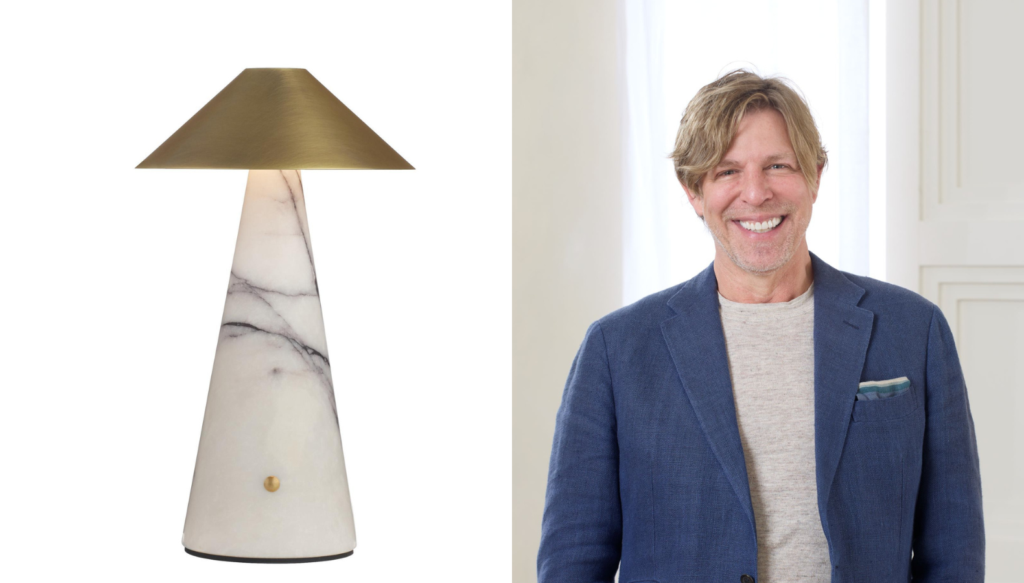
Since joining lighting and home furnishings brand Arteriors a little over a year ago, Gregory G. Heller has done something a bit unusual: He gave the design team a reading assignment, “The Accidental Creative: How to be Brilliant at a Moment’s Notice” by Todd Henry.
As vice president of product, Heller oversees all aspects of product development, from ideation to production. A key part of that job is supporting and guiding the company’s three designers so they can produce their best work.
“The Accidental Creative” offers tips on enhancing focus and attention, developing stimulating relationships and effectively managing energy and time to eliminate drains on creativity. To support that last goal of effective time management, Heller has been reducing the number of meetings designers need to attend and encouraging them to set aside larger blocks of uninterrupted time for their work.
“Our CEO (John Hart) understands creatives very well. In a lot of corporate environments, creatives are asked to turn on their creativity on a dime and that’s not how creativity works,” Heller says. “You’re in the middle of dreaming, sketching away, conceptualizing and someone comes in and interrupts and it breaks the zone. We try to be very protective of our designers here. If I could put them in a bubble, I would. … So, we’re trying to honor that and build a culture where other teams understand and help protect the creative process.”
Heller has held executive merchandising, product development and creative leadership roles at several home furnishings brands – including Thomasville, Baker and Bernhardt – and he knows Arteriors well, having shopped the brand to accessorize market showrooms.
What drew Heller to Arteriors is what draws lighting showrooms and interior designers to the brand. “I like to think that our designs go beyond just the design: They’re really elevating someone’s experience with this beautiful mix of materials,” he says.
Arteriors’ products are always grounded in scale and proportion. “Once you get this beautifully proportioned and perfectly scaled piece, then you start playing around with materiality. I think our design team is very good at that conversation between materials. … I think that’s what we’re known for,” he notes.
The company’s lighting line includes a wide array of chandeliers, pendants, multiport and multidrop fixtures, sconces, flushmounts, table lamps and floor lamps. Last spring, Arteriors debuted a line of rechargeable lamps, which Heller expects to be a growing category among both residential and hospitality customers because of the flexibility the cordless lamps offer. “You’ll see more designs coming from us soon,” he says, adding that the company is exploring ways to extend battery life and is introducing a charging mat.
“Made with love”
The creative process at Arteriors starts with lighting and then the team moves on to other product categories, which include furniture, outdoor, wall decor and other accessories. “We really do like playing in all those categories, but lighting will always be our main focus and it’s the largest part of our business,” Heller says.
Ideation to production takes roughly 18-22 months. When Heller and I spoke recently, the team was holding market strategy meetings for spring 2028 product launches.
Heller considers himself a “frustrated designer” and likes to weigh in on product designs but, in keeping with his goal of letting the team work unimpeded as much as possible, he tries to limit product reviews to twice weekly meetings — unless, of course, designers come to him with questions.
Heller compares the design process to cooking: “When you taste food that’s made with love, you can taste that care in what you’re eating. It’s the same thing with designing products. It’s that whole idea that the love you put into this process makes a beautiful piece that you go to market with.”
The idea of putting love into a design is one reason Arteriors’ designers are cautious about introducing artificial intelligence tools into the creative process.
“I’m not opposed to playing around with AI, but there’s something about the creative process for me – and I might be old-fashioned in this – but I like (design) going through the human experience or their filter, which I just don’t think you get through AI. You don’t get the soul, that energy that’s coming from a human,” Heller says. “However, I think it might be a good tool to use to get a few different iterations that you didn’t think of. But, from that moment, I think it has to transfer back to the human realm, to get their filter and their lens from their experiences and their lives to inform the piece a little bit more.”
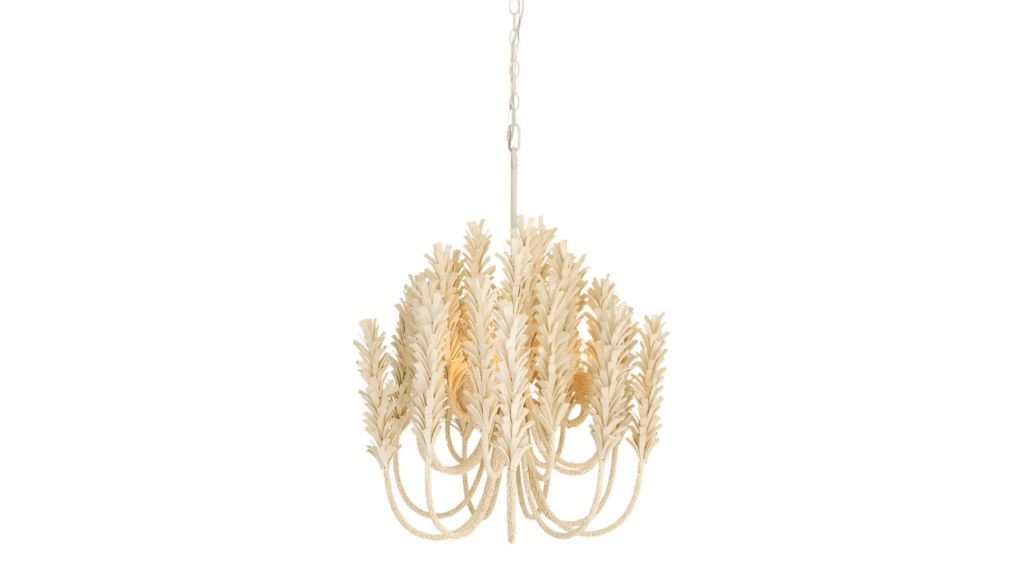
Heller points to the Kaia chandelier as representative of both Arteriors’ design aesthetic and its production process. Drawing inspiration from both couture fashion and nature, the chandelier (available in two sizes) is made of ivory coconut shell “feathers” and embellished with tiny beads on the curves of the iron arms.
“It’s this beautiful coconut shell, so it’s a natural-looking chandelier. But you can see the beadwork that could have been done on a beautiful evening gown and the coconut shell is also this beautiful feathered moment that you could also see being a detail on a gown,” Heller says. The Kaia chandelier is an example of the handcrafted nature of many Arteriors pieces. It takes two people five days to apply the more than 5,000 beads on the large chandelier. “To me, that’s the story of what we do,” Heller says.
Inviting guests
Arteriors collaborates regularly with a stable of guest designers, including Workshop/APD, Laura Kirar, Jay Jeffers, Celerie Kemble and Beth Webb. The 35-40 piece collections across categories bring different perspectives to the company’s product launches.
Last spring, Arteriors partnered once more with interior designer Barry Dixon. “With Barry, it’s like lightning in a bottle. He’s a genius how he mixes and curates objects together to make a highly nuanced collection,” Heller says. “It’s just a treat to work with someone like that.”
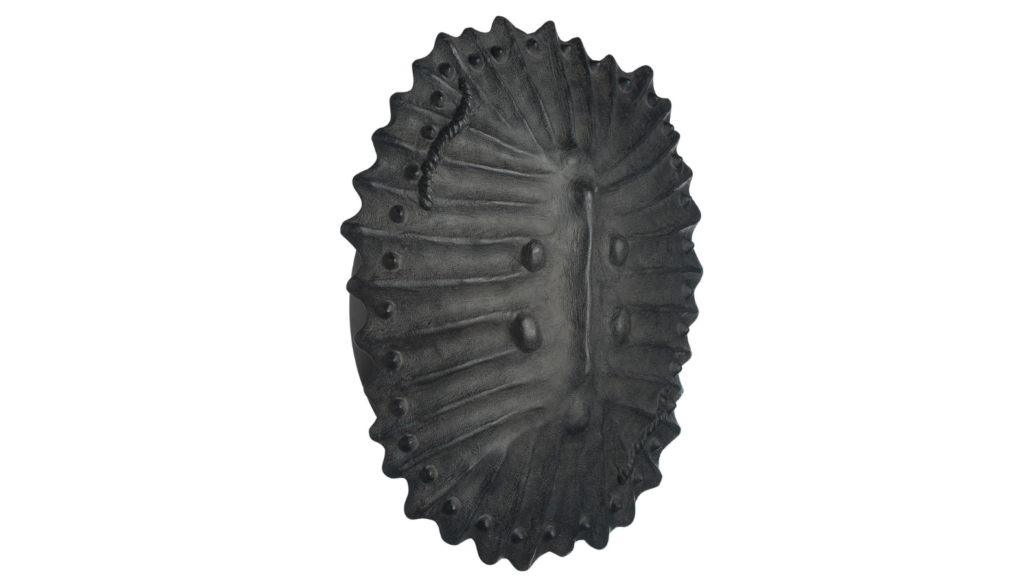
Heller was particularly struck by Dixon’s Neushoorn black bowls and a wall sconce inspired by rhinoceros he saw on travels through Africa. “They’ve got this beautiful texture on them,” Heller says.
In guest designer collaborations, Arteriors has initial meetings with the designers, who then spend several months coming up with ideas. When they return with those, Heller says, “it starts to become a dance,” as the Arteriors team and guest designer refine concepts.
When guest designers bring back designs outside the scope of what Arteriors initially laid out for the collection, “I always let them know, ‘You have a couple that you can fight for, if you really believe in them,’” Heller says. “Most of the times those are pieces that, when we went for it, turned out to be a bestseller.”
Picking up on frequencies
Heller doesn’t consider Arteriors a trendy company but says his team wants to be aware of trends.
“One reason I love working with (interior) designers is there is this frequency that I think designers work off that others don’t necessarily pick up on,” he says. “… When I hear something from one or two designers, like, ‘I’m seeing things coming that are a little brutalist,’ I think, OK. If I hear that a few more times, there’s something happening out there.” Such insights don’t necessarily drive Arteriors’ designs, but they can sometimes ground them.
Heller noted a few design directions that are grounding Arteriors’ creative process right now, including “a playful use of glass.” “Again, for us, it’s always about taking an existing material and stretching its boundaries just a little bit,” he says.
“We’re also seeing this idea of flushmounts and how they’re being used in interiors differently,” he says. Recessed lighting remains popular but “there’s a balance now of bringing out the fixture mounted to the ceiling again as opposed to that little recessed black or white box. It’s now becoming this kind of sculptural element that you can add into the room.”
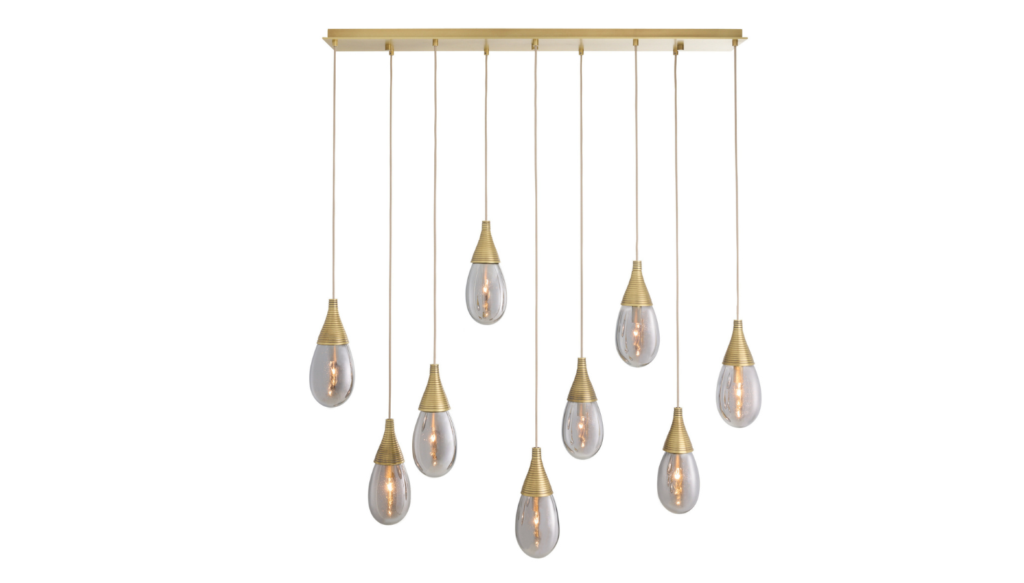
Pendants, too, are becoming more sculptural, Heller says, and sconces are being grouped and used more as art elements in areas like hallways.
“And I personally think there’s a need for more floor lamps,” he says. “Side tables … are getting smaller. They had to be big enough at one point to put a lamp on and your magazines on and your accessories and your glass on, now they’re becoming smaller. So, you need this beautiful floor lamp – or a long pendant hanging from the ceiling – that would give you the illumination that a table lamp would have.”
Many of these design directions fit nicely into a larger goal of Arteriors: giving consumers the ability to personalize their spaces.
“I think everybody wants to express themselves a little bit more,” Heller says. “… You can kind of play and make something unique.”
Related articles