By Julie A. Palm Generation Z may be digital natives, constantly connected to their electronic…
Read More →
By Julie A. Palm Generation Z may be digital natives, constantly connected to their electronic…
Read More →
Surprise! More than half of “mature singles” and “couples” said they prefer to rent —…
Read More →
The founder of Conceptual Lighting believes most people under light or over light their homes…
Read More →
Maxim Group and Kichler are the two lighting brands featured at the reimagined Design Hub…
Read More →Surveys show Americans are feeling unhappy, pessimistic and unhealthy. Upgrading their lighting is one affordable remedy.
By Julie A. Palm
Despite a reputation for can-do optimism, by and large, Americans aren’t feeling particularly happy, hopeful or healthy these days.
Earlier this year, the World Happiness Report published its 2026 rankings of countries based on self-reported well-being: The United States ranked 23rd, up one place from 2025 — but last year marked the country’s lowest place ever on the list. America peaked at No. 11 more than one decade ago in 2012.
The report – admittedly a subjective measure – gauges happiness based on gross domestic product per capita, life expectancy, social support, freedom to make individual life choices, generosity of the country’s general population and perceptions of corruption. Who was No. 1 on the happiness list this year? Finland, which has claimed the top spot for nine consecutive years.
Another dismaying measure: U.S. consumer sentiment rebounded slightly in June, but only after falling to a record low in May. And the June reading remains below the April measure, as Americans continue to be worried about persistent high inflation and its impact on their wallets.
And we continue to struggle with our health. A Pew study released in the spring found that Americans know that getting a good night’s sleep, managing stress and eating well are key to good health.
“But there are large gaps – 34 to 44 percentage points – between the share who say they are highly important and those who say they are doing extremely, or very well, at them. For example, 77% say getting enough sleep is highly important — but only 33% do really well at getting enough,” Pew says.
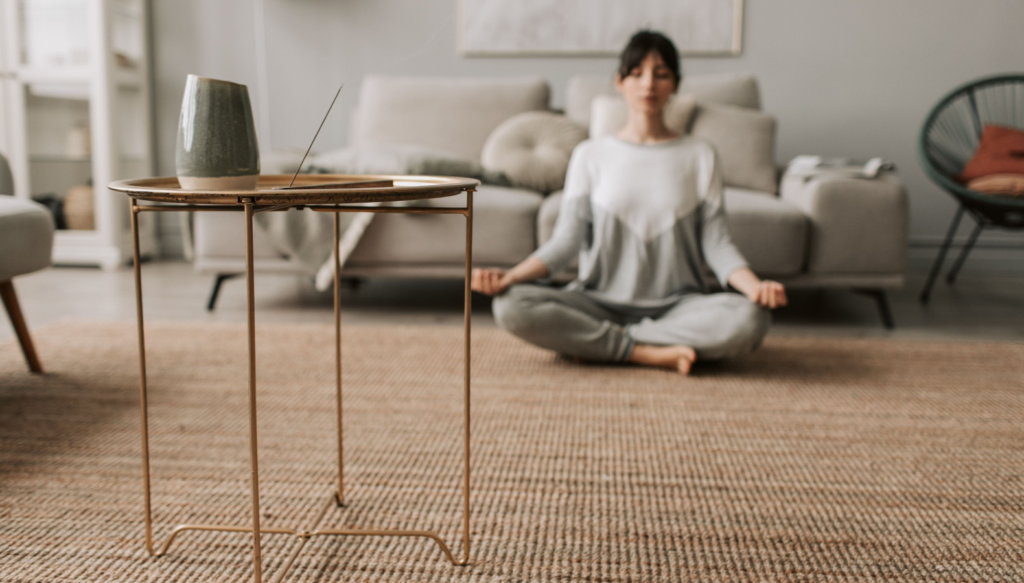
Craving wellness
Maybe it’s not surprising that U.S. homeowners are looking for ways to feel better at home.
A recent emerging trends report from Houzz shows that “the home as a sanctuary is no longer just a concept, it’s an active design priority.”
Searches for the term “wellness room” are up 164% over last year, Houzz notes, while searches for the word “calming” jumped 139%.
Houzz is also seeing significantly increased interest in the terms “biophilic design” (up 112%), “spa” (up 68%) and “home gym” (46%), as well as “sensory room” (up 43%) and “yoga room” (up 20%).
The results, Houzz notes, “show that wellness is being thought of holistically, from physical fitness to mental well-being.”
Specialized rooms like gyms and yoga rooms can require specialized lighting — and very different lighting in the case of those two rooms. Gyms: probably generous overhead lighting, some task lighting and maybe brighter bulbs. Yoga or sensory rooms: softer lighting, definitely dimmable, and I’m imagining a lot of atmospheric sconces.
But lighting is an important part of wellness throughout the home.
“Lighting is probably the No. 1 thing,” when talking about turning a home into a space that promotes well-being,” Erica McLain, founder of Dallas-based McLain by Design Interiors, told me when I talked to her for an article in our sister publication, Design News Now, last month. “I always start with lighting temperature,” she said. From a practical health standpoint, McLain is big on subtle hallway, bathroom and even kitchen lighting (such as along the cabinet toe kick) that gently and safely illuminates spaces at night without requiring people to turn on brighter lights as they move around.
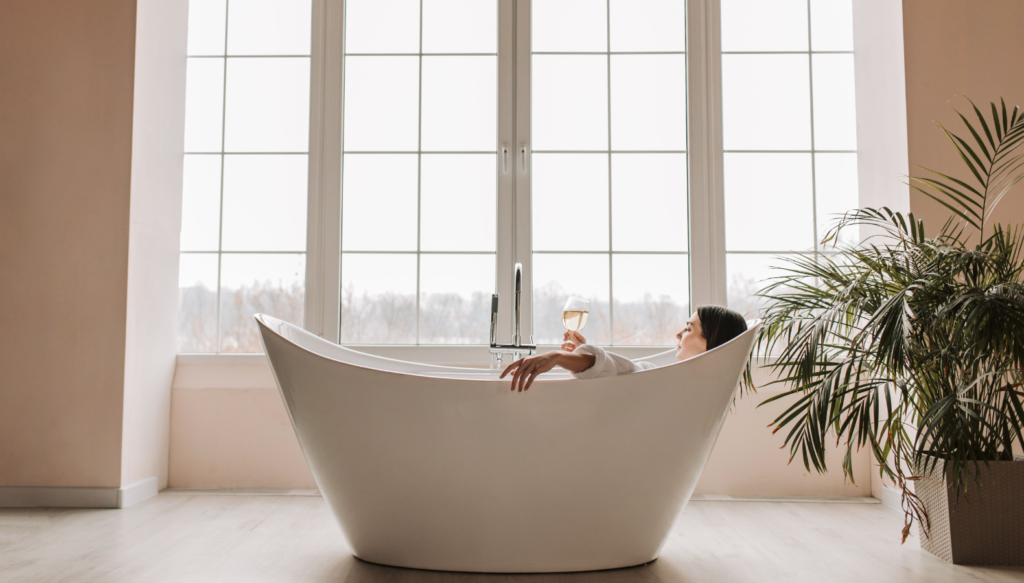
John Ballentine, principal designer for Atlanta-based Domicilio Interiors, takes a “whole house” approach to wellness. In early discussions with prospect clients, he gives them a self-audit, encouraging them to assess their homes in terms of four categories: sound (“the subtle saboteur”), light (“your circadian whisperer”), biophilia (“the nervous system reset”) and visual cortex (“cluster = cortisol”).
When designing homes, Ballentine strives to control natural light, especially in bedrooms, by using systems that lower and raise window shades. “We try to include circadian lighting as much as possible, just to support the natural cycles that our body goes through during the day,” he told me.
Programmable lighting systems that create moods at certain times are nice for those who can afford them; dimmable fixtures are a good solution for those on tighter budgets. “You have to be able to control the lighting,” McLain told me.
But the basic placement and types of lighting fixtures throughout the home are also key for wellness, whether that’s mental, physical or emotional. McLain builds on the idea that every room should have three layers of lighting: ambient (general), task (functional) and accent (decorative). It’s a basic design principle for a reason: Those layers allow people to adjust light for various uses and moods.
And, I’d add, upgrading lighting is easier for many people than renovating to create a spa bathroom or add a home gym.
“There are things in design, like wellness rooms and that sort that can improve health,” Ballentine explained. “But in general, there are studies showing that applying (biophilia, lighting and other) principles (throughout the home) reduces stress and anxiety. It improves mood and well-being. It supports better sleep and enhances focus.”
And, as those recent happiness, consumer sentiment and health surveys find, we could all use more of those things.
Related articles
