While the focus at market is on product introductions and trend directions, it’s also an…
Read More →
While the focus at market is on product introductions and trend directions, it’s also an…
Read More →
The domestic manufacturer debuted the initial lighting launch with interior designer Christopher Todd during High…
Read More →
Interior and product designer Michael Wolk reconnects with Fine Art Handcrafted Lighting for Lomond, a…
Read More →
The change, announced during the week of High Point Market, is part of a leadership…
Read More →Last week’s Interwoven trade show in High Point showed new directions for textiles — directions that speak to broader themes shaping the entire home furnishings industry.
By Julie A. Palm
The biannual Interwoven trade show in High Point probably isn’t on the calendar of most lighting showrooms. But the fabrics, leathers and trims shown there find their way into upholstery, drapery, pillows and other accessories, helping to define the look of interiors.
So, we popped into the show last week to get a sense of design directions that will influence lighting.
A few things were clear and reinforce directions we saw at the High Point Market in April.
• Trend trajectories, in general, are slowing down. I think there are a few reasons for this. First, with a stagnant housing market, people aren’t moving as often, and we know moving into a new home prompts purchases of new furniture and accessories, along with a chance for people to refresh their style. Second, we’re seeing a backlash against “fast fashion” and the idea of consumption for consumption’s sake. If you’re buying products built to last, you’re more concerned with timelessness than trends. Third, with an uncertain economy – and rising costs from things like tariffs and energy – manufacturers are more reluctant to take big risks with product lines.
Luxury fabric producer Kravet showcased a host of new designs, including modern, clean looks from designer partner Caroline Cecil in its showroom, as well its “House of Small Prints” with soft, vintage-vibed prints and a collection of rich chenilles available in 50 colors. But David Lappert Sr., vice president of sales, noted that the company also displayed a wall of classic designs from the company’s family of brands, which include Lee Jofa, Brunschwig & Fils, GP & J Baker and Donghia. That wall of timeless bestsellers will continue to be a part of the showroom going forward, he said.
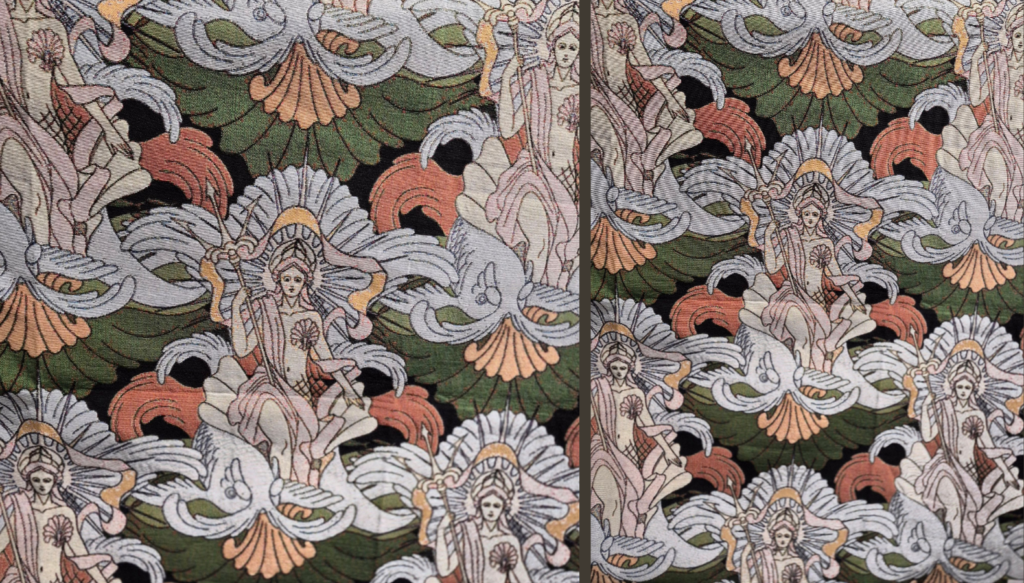
• Traditional looks are having a resurgence, though traditional looks are updates on what’s come before, including whimsical tapestries like those from Skye Moda, which made its debut at the show. Florals are getting updates, too, with ethereal, dreamier looks and “grandma” vibes.
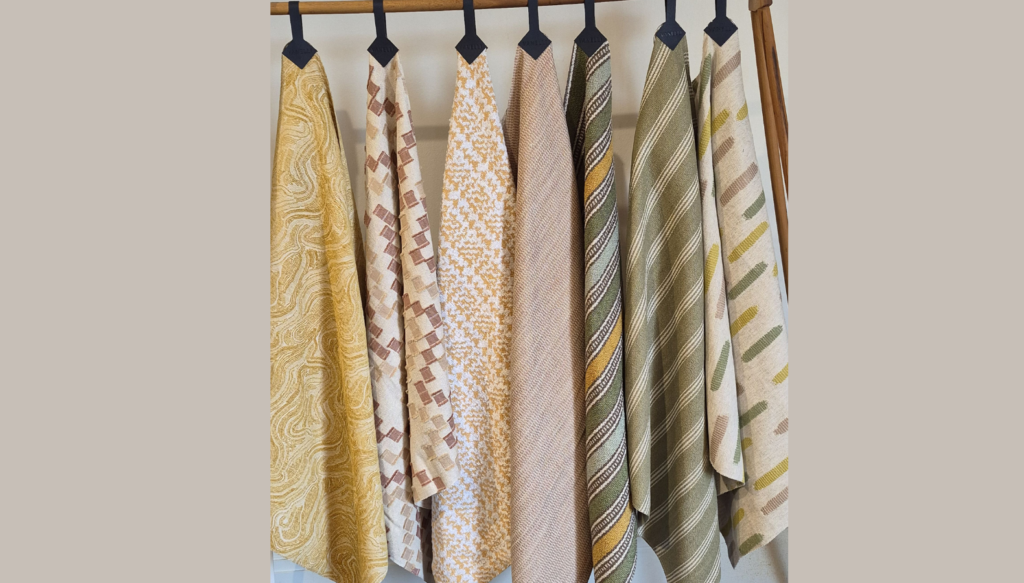
• Colors continue to warm. Cool grays and stark whites continue to recede from the marketplace but generally aren’t being replaced by brights. Instead, we’re seeing warm, welcoming and sometimes worn gold, green and brown shades. J. Donald Frail at Silk Crafts Inc. called the company’s current featured palette as “happy colors,” with warm corals and browns; vintage-y, faded blues; and soft, fresh greens. The whites in its showcased palette are tinged with taupe.
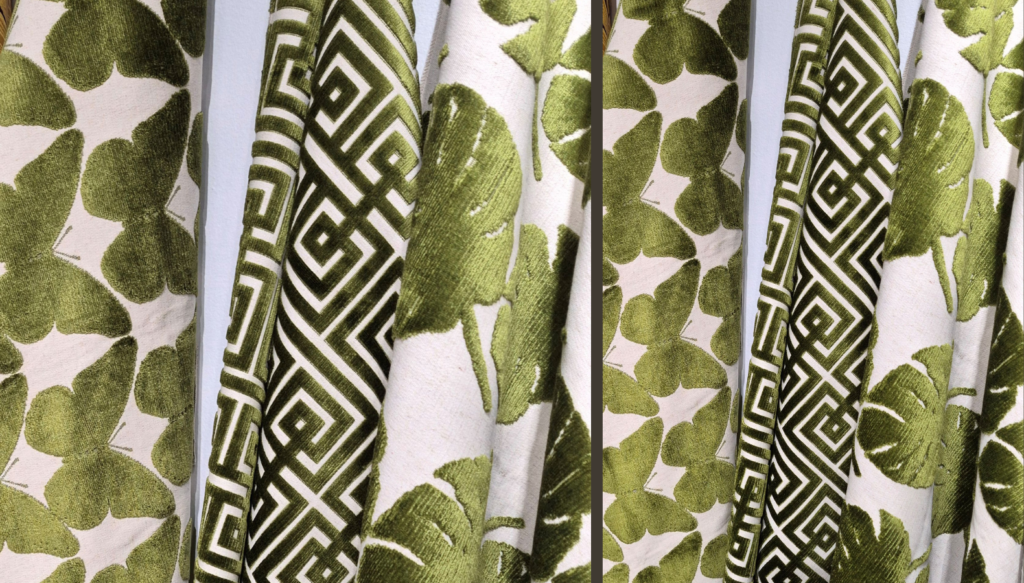
• Textural interest. Lappert says Kravet’s customers are asking for “a lot of real plush textures,” which add depth, in particular, to solid patterns. Throughout the show, vendors showcased sumptuous velvets and chenilles, with varying piles adding even more visual and tactile.
During Interwoven, trend forecasting and consumer insights company Future Snoops (FS) gave marketgoers an overview of what they call Spring/Summer 2027 Home Shifts — the trends at wholesale that will make their way into consumer products next year and how those are rooted in fabric introductions.
You’ll see how they tie into the trends I noted above and how the four are linked:
1. The direction FS deems Exhale is a reimagined coastal direction, with pared-back forms. It’s elegant, it’s distilled and never kitschy or cliched. “It’s a more harmonious movement — those blues, the greens that make you feel comforted,” says Jaye Anna Mize, vice president of advisory and partnerships for FS. “So, it’s less about being kind of beachy, if you will, and more about being a little bit aquatic. There’s a quiet and tranquility to it.” In the home, this translates to less visual noise and more meditative spaces, FS predicts. Fitting fabrics included sun-washed florals and tumbled stripes.
2. The home shift that FS calls Swift is also influenced by the shore, but think European coastal villages and a more masculine nautical feel. “It’s kind of a crazy ‘Mad Man-esque’ meets the beach,” Mize says. How does this apply to the home? FS says to look for living spaces influenced by boutique hotels and coastal villas, with a focus on architectural details as much as décor. Fabric representations include tailored checks and plaids, and updated stripes in medium browns and neutrals.
3. The direction called Combe is storied, with an emphasis on the land (natural dyes for instance), craft and heritage. Combe ties directly into movement away from disposable decor and updates the “mass-market farmhouse” look with a more “rustic romanticism,” FS says. “There’s an authenticity conversation that’s really happening for consumers,” Mize says. “… Everybody is playing in the lanes of traditional, so this is the next evolution of that, where it’s really mixing and merging different types of heritage, making it feel more personal.” In fabrics this means, vintage feels, including florals at every scale.
4. Revive is a reaction to an age of automation, with a focus nature and craft and an appreciation of imperfections and longevity. Think weathered textures and earthy, rich color palettes. In the home this means raw, unfinished surfaces that wear over time, adding to their character. From an upholstery standpoint, Revive embraces aged leathers, as well as natural and woven textiles.
Related articles