Maxim Group and Kichler are the two lighting brands featured at the reimagined Design Hub…
Read More →
Maxim Group and Kichler are the two lighting brands featured at the reimagined Design Hub…
Read More →
KBB magazine’s recent webinar “The Essential Role of Lighting in Residential Design” provided insight on…
Read More →
A long-time High Point Market exhibitor, Ngala Trading will open a Dallas Market Center showroom…
Read More →
New exclusive Consumer Insights Now research shows this is a need-driven generation that likes to…
Read More →Panels of vendors and designers at High Point Market pointed to key shifts that are influencing how fixtures are being designed and used throughout the home. One direction, in particular, is a boon for lighting showrooms.
By Julie A. Palm
Among the showroom visits, market tours and parties, High Point Market offers plenty of opportunities to pick up insights from panels and speakers. I popped into a couple of lighting-focused panels during the show and came away with four trends shaping lighting design right now.
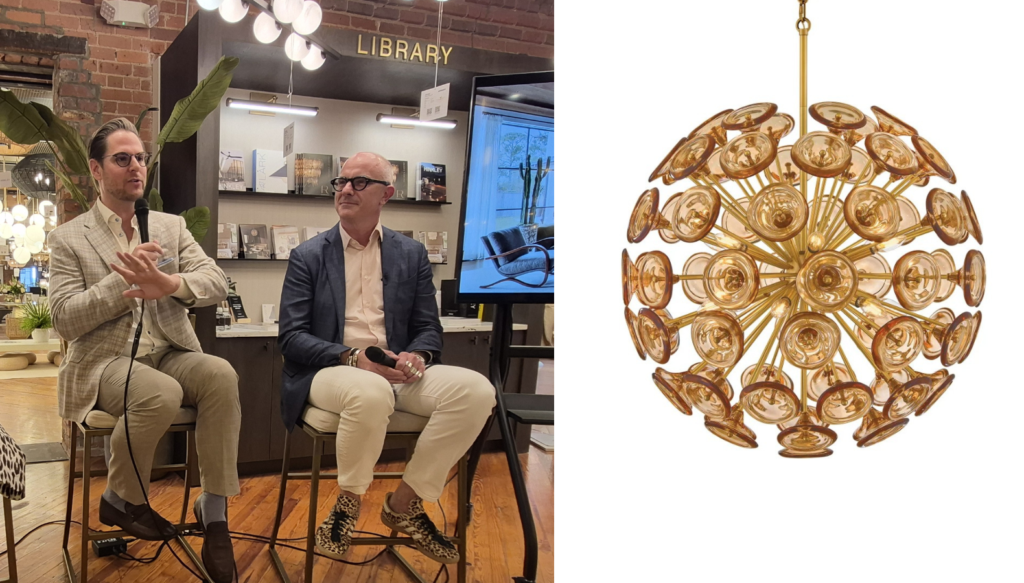
The first was “Experience Lighting Design With Benjamin Johnston & Phillip Thomas” at luxury lighting showroom Hinkley, moderated by LUXE Interiors + Design’s Kathryn Given. Johnston is partner and creative director of Benjamin Johnston Design, a Houston-based architecture and interior design firm. Thomas is founder of Phillip Thomas Inc., a New York-based interior design firm.
The second was “Lighting Beyond Specification: The Rise of Designer-Led Customization,” a conversation with Ron Henderson, founder and president of lighting manufacturer Varaluz, and Khoi Vo, president and CEO of the American Society of Interior Designers at the Varaluz showroom. Varaluz collaborators Tamara Day (who debuted a new mirror collection with the vendor), Kristi Hopper (who unveiled a new botanical-inspired lighting group) and David Santiago (who is working on a lighting line with Varaluz that will debut in 2027) also chimed into the discussion.
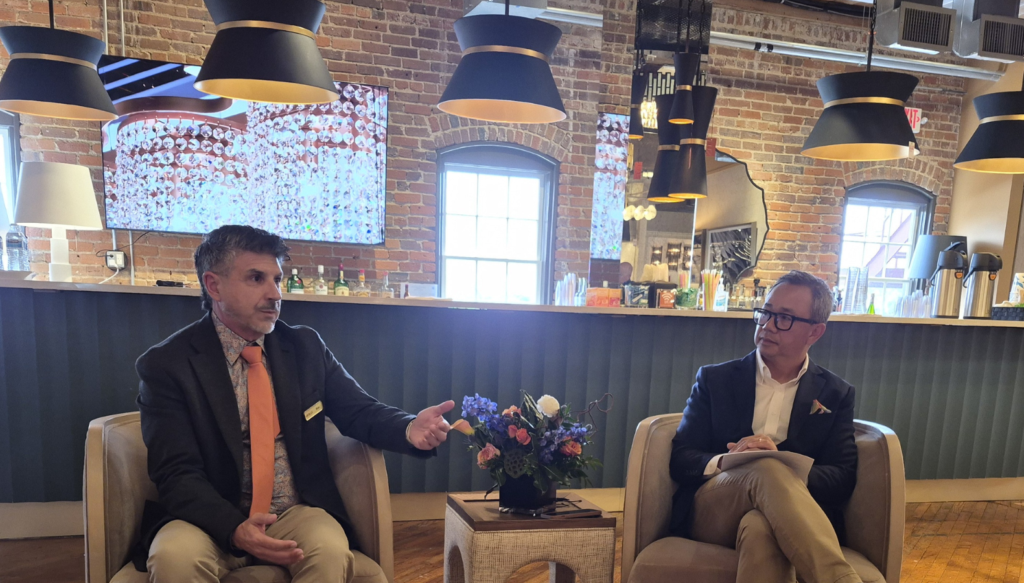
Here’s some of what they shared:
• First things first — ASID’s Vo said lighting “has really become part of the beginning conversation of any design project” and that his association’s latest research shows “that there’s a shift in thinking about (lighting) products as finishes to thinking about them more as an overall experience about the space and the architecture.”
Varaluz’s Henderson agreed. “Thirty-plus years ago when I started in this industry, we used to complain that we were the tail of the dog. … It was the last thing you thought of — and that’s also when there’s no budget left. …It’s really been refreshing and wonderful to see that evolve.”
As Henderson noted, the shift is a big benefit to lighting vendors and showrooms because it means bigger, more intentional budgets for lighting.
Thomas is one of those designers who considers lighting choices early in the design process. “To me, light is one of the most fundamental elements in the space,” he said. “The way you move light around a space helps to accentuate a space and make a space feel bigger. It puts you at ease; it energizes you. It does so many things.”
• A move away from “plastic fantastic” — Thomas’ cheeky description of a shift away from perfect, machined, synthetic materials and toward handcrafted products made with natural materials resonated with the panel audience.
“For me, being able to see the hand that made something breathes life into a piece. It gives it a soul. … I have some clients that love the idea of everything being ‘plastic fantastic’ and there is a time and place for that,” he said. “… But in the journey we go through together creating their home, (they) come to understand the importance of things having singularity and not every element being perfect.”
As a good example of the opposite of “plastic fantastic,” Thomas pointed to the Maya fixture, part of Hinkley’s Fredrick Ramond brand, which the lighting company relaunched during High Point Market. “If you look at the Maya chandelier to my left, you’ll see that every glass disc is handblown and, to that end, each disc is unique, which, to me, is fantastic. Each piece, as a consequence, reflects light in a different way,” he said.
Day made a similar point during the panel in the Varaluz showroom.
“I think clients are becoming tired of the disposable elements of design, and they’re looking for more quality,” Day said. “They’re looking for something that’s heirloom quality. And I think that very elegant design is timeless, and that it is something that they can pass down that their kids will actually want. … The right design and the right style with the (right) quality, people are really looking for that. They’re not wanting to turn it and burn it all the time.”
• Playing with scale — Home design can be defined by rules and guidelines, including where to place lighting fixtures. “I love those rules because they’re great, but they can also lead to unmemorable interiors, and one of the great opportunities we have as designers is to create those memorable spaces,” Johnston said.
He especially likes to break lighting rules and one way he does that is with fixture scale.
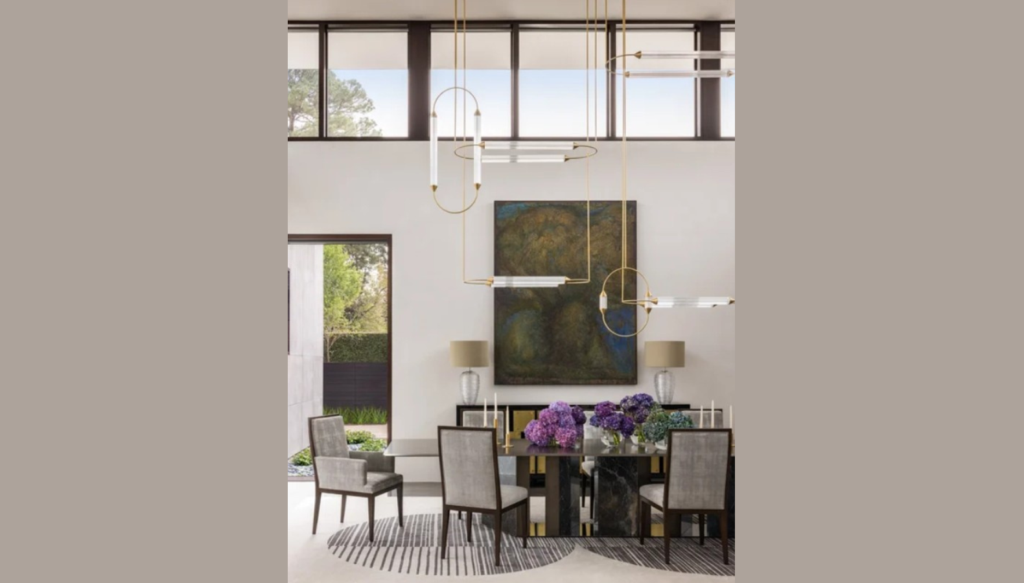
“I love going two directions with scale — either I want to go way bigger than I was prescribed to go, or I want to go much smaller than is prescribed to go because I think that that creates a tension and it creates some interest,” Johnston said.
And, he added, “I think every space should have something a little funky, a little ugly, a little off-scale, something of a color that’s not exactly right. I think that just makes for an interior that your guests and your clients are going to remember forever.”
Henderson at Varaluz noted that when it comes to scale, he’s seen “a dramatic shift” in demand for larger-scale fixtures, in part, because of larger table sizes. “The standard piece that people were buying for their home was 22- to 24-inch diameter, now it’s 32- to 36-inch (because) table sizes have changed,” he said. Day’s new mirror collection with Varaluz features several large-scale options.
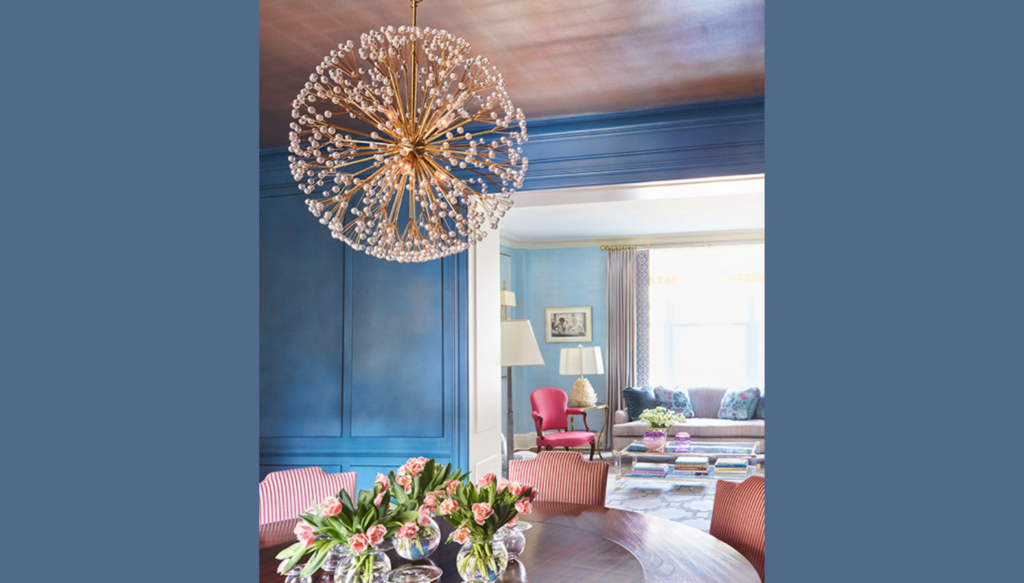
• The age of control freaks. Like many designers, Thomas is a big fan of “dimmers on everything” to give homeowners control over the light in their spaces, and Johnston embraces the next step up — full lighting control systems.
“(When designing a room’s lighting) I also think about mood. It’s so critical,” Johnston said. “Thank God for lighting control systems. I’m a huge believer in Lutron systems and I love, after we get all the beautiful decorative lighting installed, being able to go through and program those scenes, so that the lighting can adjust and shift to whatever mood you’re wanting to create.”
Henderson said Varaluz appreciates designers’ and homeowners’ desire for lighting control and addresses that need by designing “pretty basic sockets so that you control the lamping but that work with every available control system.”
Henderson and Vo noted that lighting control systems (and dimmers, for that matter) aren’t just about setting a mood. They can also help address a broader trend in home design: the need for intergenerational spaces. Because the lighting requirements of Gen Zers and Gen Xers or Baby Boomers sharing a home are very different.
“The needs of a 20 year old are very different from the needs of a 50 year old or the needs of an 80 year old,” Henderson said. “And if you’re in multigenerational living (home), and you’re trying to accomplish all three, that’s super challenging. Lighting control systems and the lamping technology are really where you can make the biggest impact with that.”
Related articles
