The domestic manufacturer debuted the initial lighting launch with interior designer Christopher Todd during High…
Read More →
The domestic manufacturer debuted the initial lighting launch with interior designer Christopher Todd during High…
Read More →
Interior and product designer Michael Wolk reconnects with Fine Art Handcrafted Lighting for Lomond, a…
Read More →
More than 60 lighting designs and 45 pieces of art will make their debut at…
Read More →An emphasis on interactive displays is just one of the ways finalists in the Showroom of the Year Awards are maximizing the in-store experience.
In the convenient world of online shopping, it’s hard to persuade potential customers to visit a brick-and-mortar store of any kind. The finalists in this year’s Showroom of the Year Awards share what they are doing to make shoppers feel like a trip to a lighting store is worth their time.
For most of these showrooms, the common denominator is having displays that not only look beautiful, but educate the customer.
For example, at Kilohana Lighting in Hawaii, owner Susan Irie changed her approach to displaying product several years ago. Instead of using most of the showroom space to hang and mount fixtures, she decided to continue maintaining a healthy inventory — but show less fixtures.
“It made more sense to better-utilize the showroom floor by ‘selling’ the concept of what good lighting can do rather than merely showing a lot of product,” Irie said. Instead, she has transformed a significant portion of her showroom into a lighting lab that demonstrates various architectural lighting effects so that customers can visualize the type of lighting (i.e. beam spreads, color temperature, and mood) they want in their homes or hospitality and commercial projects.
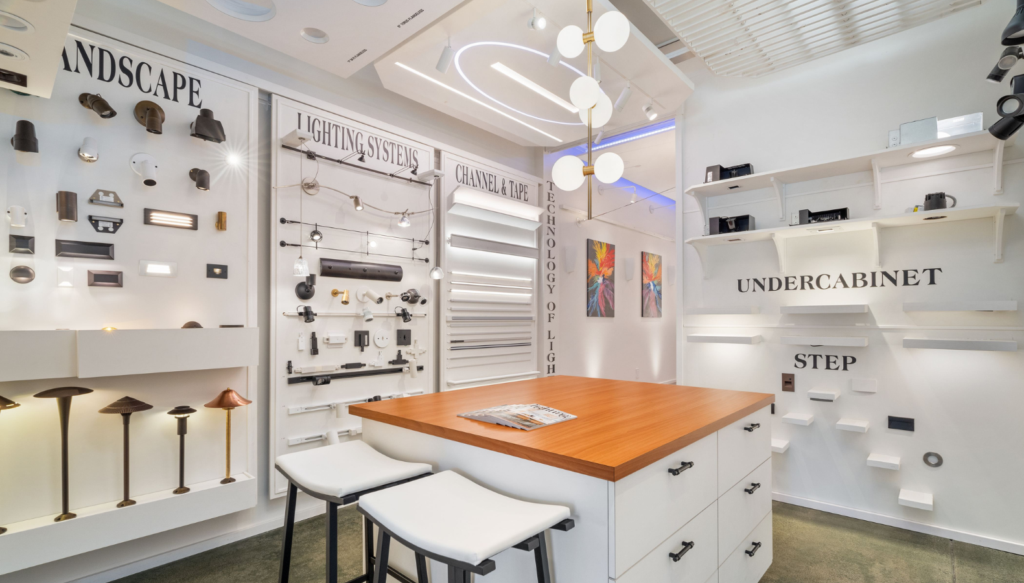
Teaching customers the difference between good and “bad” lighting by literally showing them how good lighting “feels” in a space is Irie’s most successful sales tool. While she does have product on display, she makes the most sales by sitting with the customer at a table below a large video screen. Together they go over the potential selection via digital catalogs with appropriate products displayed overhead. While Irie limits the amount of visible merchandise in her showroom, it does not mean she has less products available. She maintains several warehouses throughout Hawaii to make delivery fast and easy.
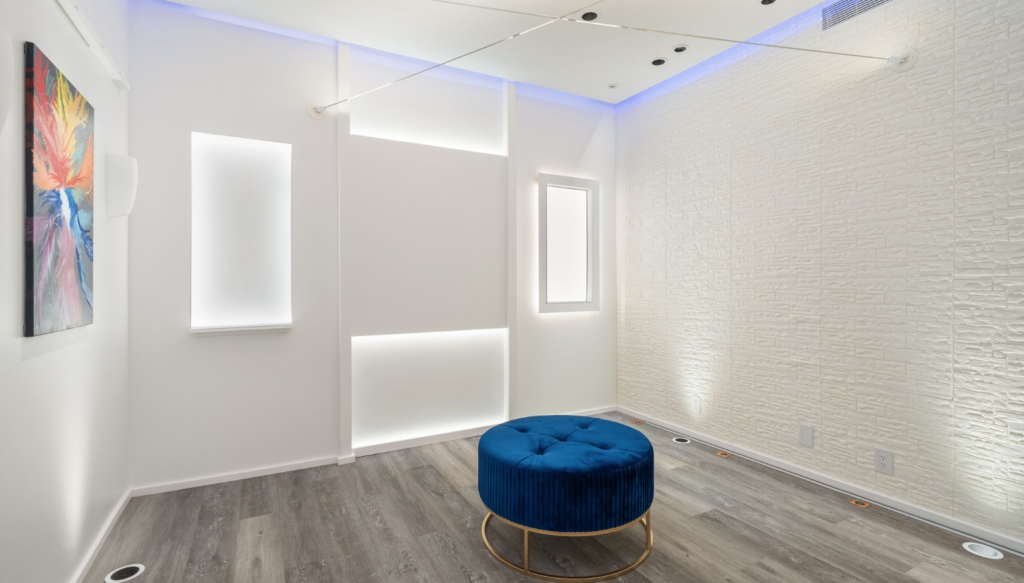
“Once clients experience how they feel in good lighting, price is less of an issue — but they need to see it in order to understand it,” Irie explained. Those demonstrations that customers experience at Kilohana Lighting also engender trust, leading to future purchases down the road as the customers (homeowners, architects, specifiers, and designers) expand their home renovations, relocate, or begin a new commercial project.
Orem, Utah-based Nova Lighting (formerly known as Hansen Lighting) has a three-fold strategy for its six showrooms: clarity, education, and intentional design. The goal is to simplify the selection process, which can feel overwhelming to the customer.
“Our displays are designed to educate as much as they inspire. Rather than simply showcasing fixtures, we use live demonstrations to show how color temperature affects mood, how fixture scale relates to architecture, and how layered lighting creates depth, functionality, and balance within a space. This allows customers to better understand how lighting works in a home, whether they are selecting a single pendant or planning an entire project,” noted Brooke Hatch, marketing manager.
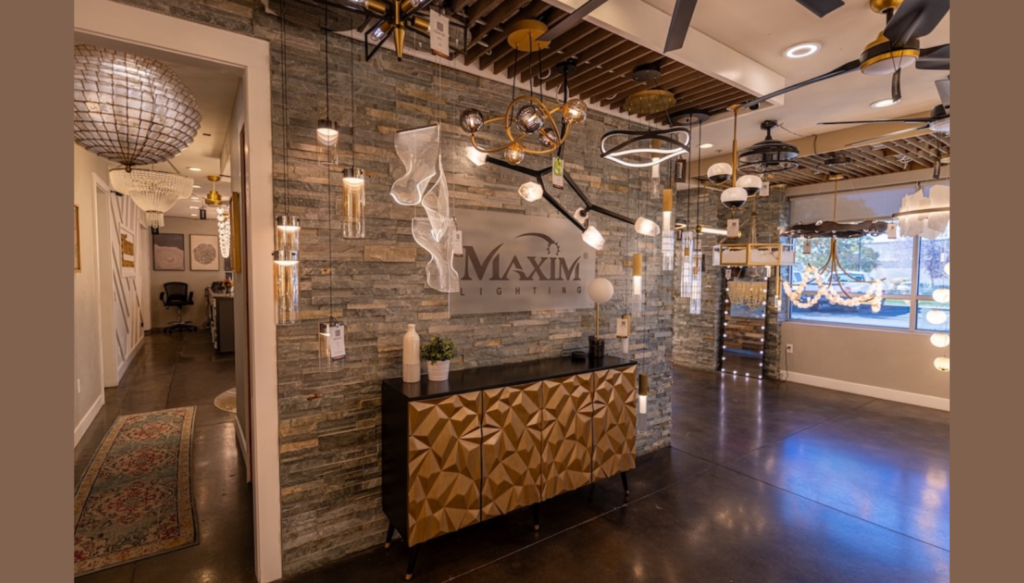
“We merchandise by both brand and style to serve different stages of the customer journey. Brand-focused walls help designers and builders quickly recognize each manufacturer’s distinct style and craftsmanship, while style-based groupings show how sconces, pendants, and chandeliers work together across a home. This dual structure helps designers, builders, and homeowners to evaluate options efficiently while maintaining creative flexibility,” she added.
Nova Lighting’s dedicated outdoor lighting sections are organized by application and finish, such as coastal, UV-protected, Dark Sky, and wet-rated options. “By integrating performance considerations directly into the display environment, customers can confidently balance design with compliance requirements,” Hatch explained.
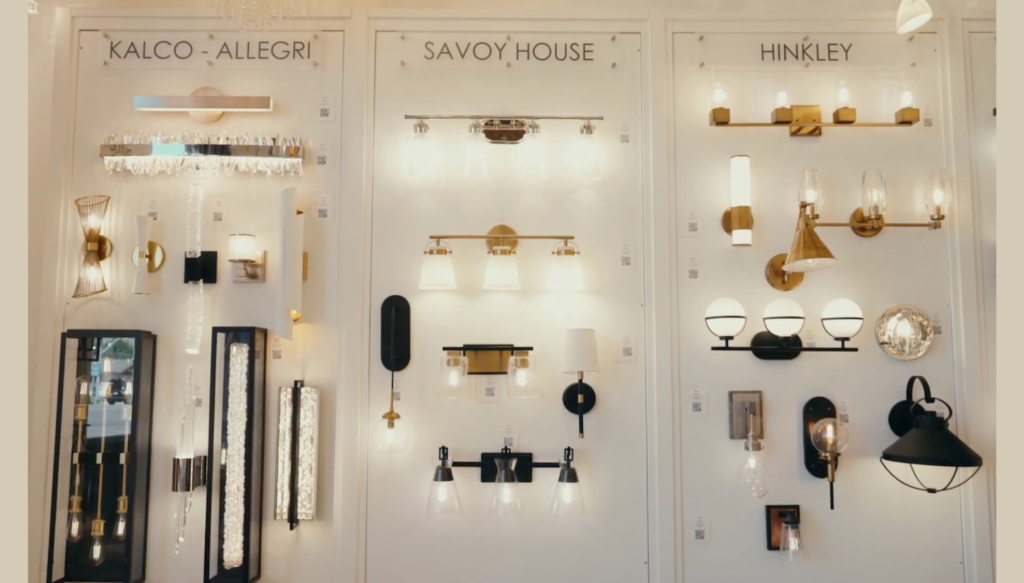
Nova Lighting intentionally organizes its displays to remain easy to navigate and simple to refresh as new collections arrive. “The result is a merchandising system that delivers a curated, boutique experience while remaining structured and scalable as the company continues to grow,” she said.
The Lightology showroom in Chicago – which is able to showcase lighting over three floors plus a rooftop garden that serves as an outdoor lighting lab as well as event space – has been at the forefront of displaying lighting in realistic settings for 20+ years.
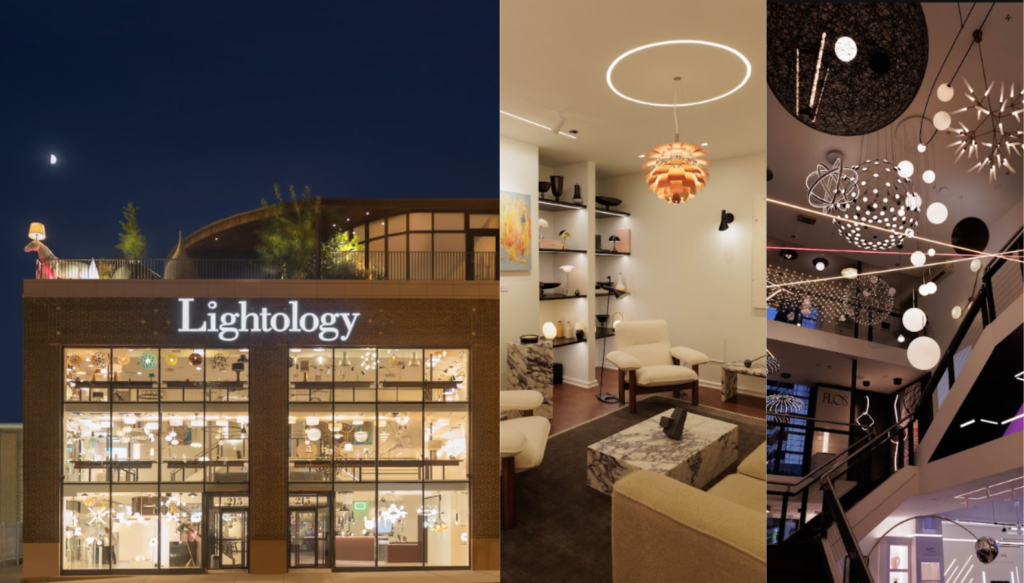
“Our store stands out as the largest contemporary lighting showroom in the U.S.,” noted Allison Hilliard, marketing manager. “What sets us apart is how we present these collections. With two full-time electricians and a dedicated building manager on staff, we are constantly refreshing and reimagining our displays. Our showroom evolves every day, offering a fresh and inspiring experience each time someone walks through our doors.”
Instead of using modular ceiling grids for hanging fixtures, Lightology takes it a step further. “Every fixture on our floor is installed exactly as it would be in a real setting. This attention to detail allows our clients to experience the full impact of each piece,” Hilliard said.
EL Design in Elk Grove Village, Ill., is another believer in creating a fully interactive environment for customers.
“You can touch, sit, and move pieces around to see how they’ll look and feel in your own home,” explained Kelly Gallagher, president. “Every display is a carefully crafted vignette by award-winning designers so that it feels like stepping into a custom-designed home. The space is constantly evolving, with furniture and displays shifting regularly to spark inspiration with every visit.”
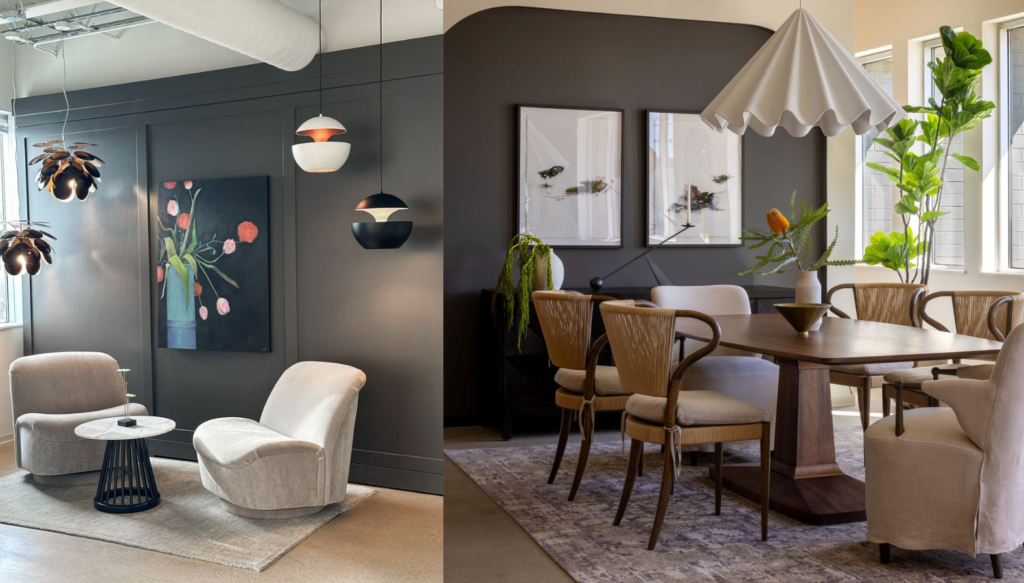
From its inception, Lighting Design in Draper, Utah, has presented lighting in realistic environments. “Our founder, Jean Eyre, felt it was prudent to show what lighting would look like in the customer’s home. Rather than simply stick to a grid system, she added furniture to displays and hung light fixtures at different levels so the showroom felt like stepping into a home. Our warehouse manager has continued this practice by incorporating furniture, décor, and unique displays around the showroom,” noted Maegan Eyre, marketing coordinator.
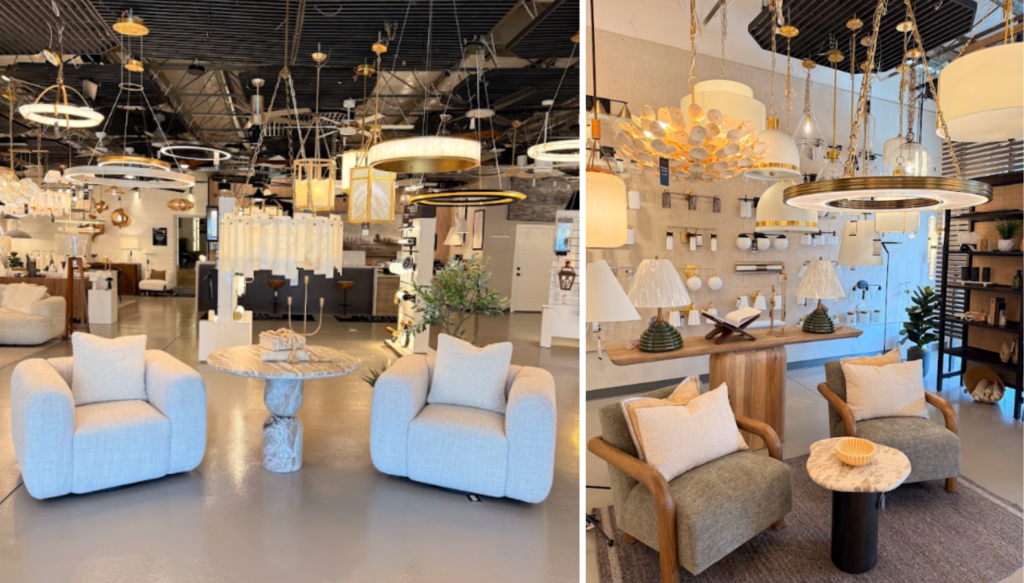
To better serve its commercial clientele as well as residential customers, the LED Distribution showroom in Puerto Rico offers working displays — from basic surface-mounted ceiling fixtures to full-scale street lights.
“We have full displays of each of our products, which facilitates informed decision-making and ensures that customers find the option that best fits their needs,” said Bryan Rivera, president. “What truly distinguishes our displays is the ability for both electrical and solar products to be turned on at the point of sale. This allows customers to directly experience the lighting and performance of each fixture. This tactile and visual experience reinforces their confidence in the purchase and highlights the value of our products.”
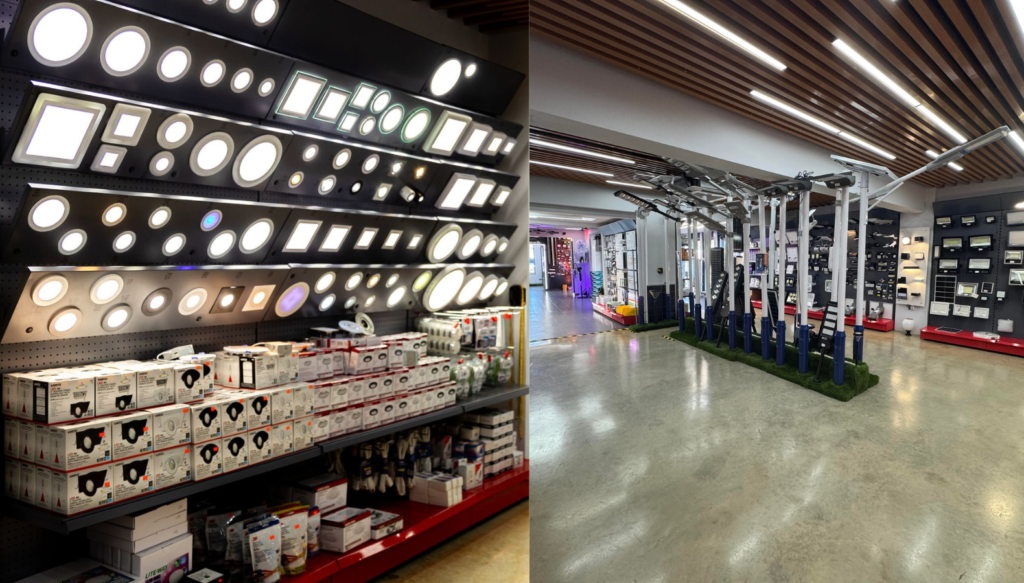
Tammy Dalton, marketing director for Accent Lighting in Wichita, Kansas, agreed that displays that demonstrate the benefits of lighting are among the most effective sales tools.
“We focus on storytelling through our displays,” Dalton explained. “Instead of rows of product, we build lifestyle settings that demonstrate how lighting transforms a space — from statement entry chandeliers to layered kitchen lighting and outdoor ambiance.”
Describing Accent Lighting’s merchandising approach as “intentional, layered, and design-driven,” Dalton noted that every vignette is curated with scale, finish, and function in mind so shoppers can see how pendants, chandeliers, sconces, and lamps work together as a complete lighting plan.
“Our goal is to inspire while also educating, helping customers understand proportion, placement, and purpose,” she stated. “We showcase premium collections in a way that feels approachable, while our team provides consultative support to ensure selections are both beautiful and functional.”
Taking a page from the successful store-within-a-store concept embraced by upscale department stores, the branded format “supports both brand storytelling and consumer clarity, offering curated selections that span traditional to contemporary,” Dalton said.
The store-within-a-store strategy
For many years, lighting showrooms did not list brand names on the products they carried as a way to discourage price shopping. While that method does work, one side effect is that it caused a lack of brand awareness among consumers.
Now more lighting showrooms are embracing the store-within-a-store strategy made popular by upscale department stores decades ago. In this concept, the lighting manufacturer’s brand is prominently featured in designated sections on wall panels or as a gallery presentation.
At Lightology, Hilliard noted, “We are proud to feature exclusive shop-in-shop installations from leading global brands including Louis Poulsen and Audo Copenhagen. These dedicated environments allow visitors to experience each brand’s vision in an immersive and authentic way — all within our larger showroom. However, while we feature some of the most iconic lighting brands in the industry, we are equally committed to supporting emerging makers, offering them a platform to grow through our expansive showroom and extensive client network.”
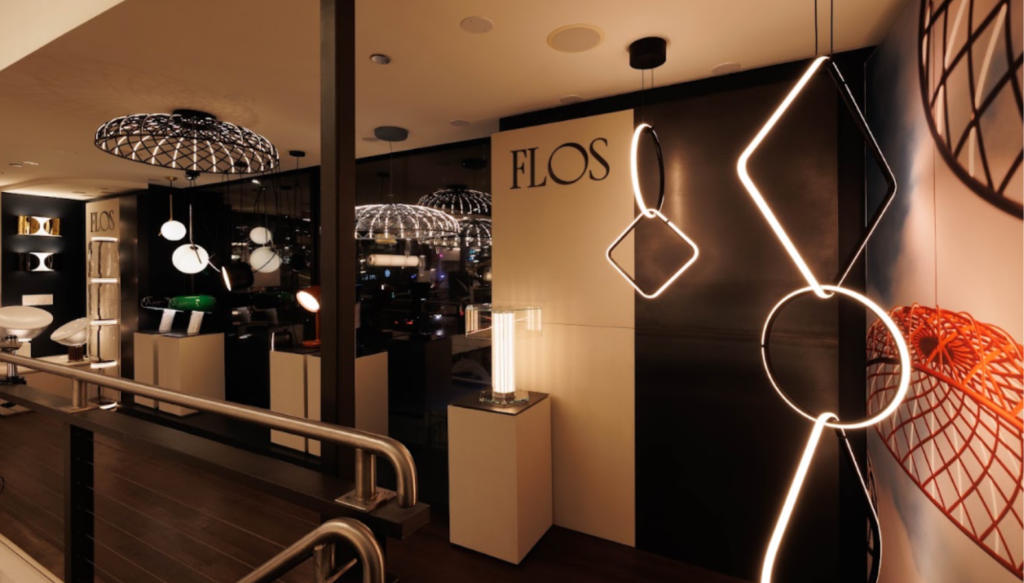
Lightology recently launched a store-within-store for the Italian lighting manufacturer Flos. “It’s the only installation of its kind in the region,” Hilliard stated. “This immersive environment showcases the brand’s vision in a fully realized setting and includes exclusive product that can only be seen in our showroom.”
At Bright Ideas in Albuquerque, New Mexico, promoting the brand names the store carries through gallery presentations has proved effective. The showroom presents curated displays from vendor partners such as Palecek, Schonbek Forever, WAC Home, David Trubridge, and Buster and Punch.
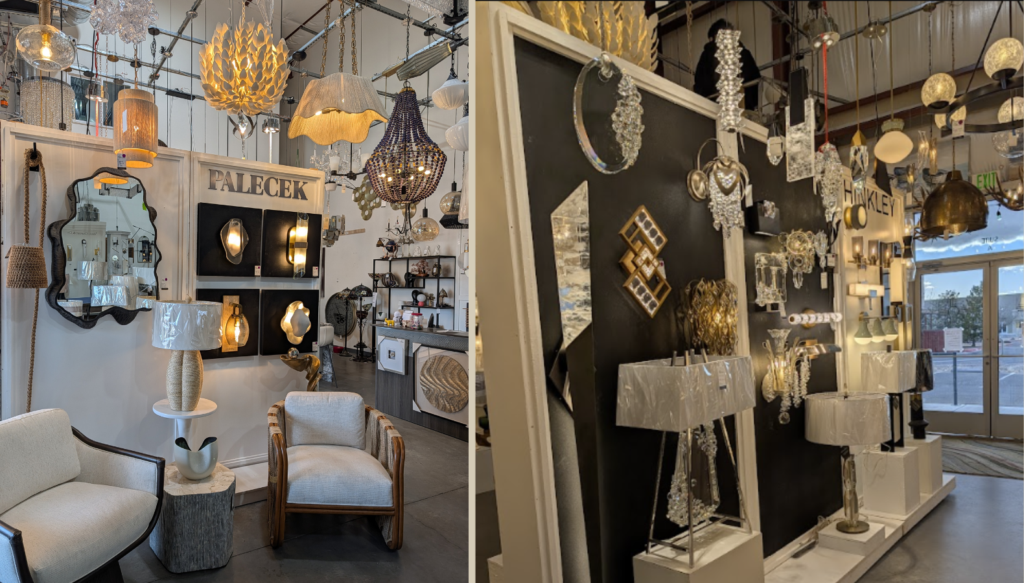
“We want to offer unique collections unavailable elsewhere in our market,” explained Arielle Cofer, showroom manager. “We also recently redesigned dedicated sections for Savoy House and Hammerton Studio to better showcase their design versatility.”
EL Design highlights their products’ origins as a distinguishing feature. “Our collection features over 100 designers from around the world, alongside vintage finds and works by local artists,” Gallagher said. “We represent more than 100 brands from Denmark, Italy, the Netherlands, France, Switzerland, Spain, Belgium, and the Czech Republic. Each brings a unique design heritage, yet all share a dedication to quality, authenticity, and exceptional craftsmanship.”
Frank Therrien, owner of Georgia Lighting, has leaned into the power of brand recognition, noting that his decision to move the product selection more “upmarket” has made a difference in the showroom’s visual presentation.
“We seek to retain as much of the designer business as possible in this environment where they have more direct purchase paths than ever,” he explained. “One way we have accomplished this is by maintaining the largest branded gallery spaces for brands that have real equity in their names. My reps tell me that our Visual Comfort, Hudson Valley Lighting Group, and Hinkley/Fredrick Ramond galleries are the largest and most complete in the state! We’ve even joined the rarified ranks of being an authorized dealer for the Ralph Lauren Home lighting collection. We are very selective on which brands we celebrate in this way, but this approach validates Georgia Lighting as a premier showroom for designers.”
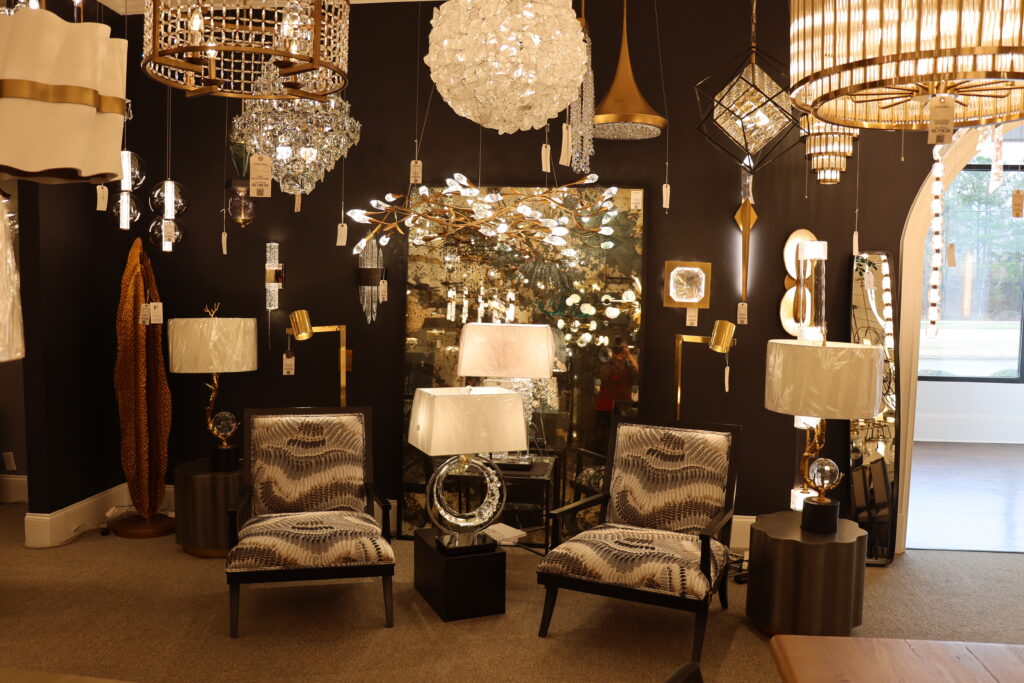
Another distinguishing factor is seeking out new resources. “We’re always trying new things.” Therrien said. “Georgia Lighting was the first lighting showroom to display brands like Lib & Co., Palecek, Arabela Lighting, and SDQ Lighting in the state. We are in front of it!”
Overall, the best merchandising practices from these Showroom of the Year finalists focus on demonstrating the effects of good lighting, making a concentrated effort to display realistic room settings – even if it takes up more space in the showroom – and highlighting select brands prominently while also presenting unique lighting finds.
Related articles
How Are Showrooms Using AI Today?
DMC Announces 2026 Showroom of the Year Award Winners
How Top Showrooms Changed Their Website Strategy