By Julie A. Palm Generation Z may be digital natives, constantly connected to their electronic…
Read More →
By Julie A. Palm Generation Z may be digital natives, constantly connected to their electronic…
Read More →
Surprise! More than half of “mature singles” and “couples” said they prefer to rent —…
Read More →
The founder of Conceptual Lighting believes most people under light or over light their homes…
Read More →
Maxim Group and Kichler are the two lighting brands featured at the reimagined Design Hub…
Read More →The CEO and president of Crescent Lighting believes lighting showrooms are worth the investment. He tells Lighting News Now why.
When you look at Crescent Lighting CEO Grant Jones’ career path on paper – financial advisor at Ameriprise Financial, head of hardscape company Willamette Graystone, director of an investment bank, chief financial officer of a wireless systems company, and CEO of an investment firm – spearheading a lighting firm seems a bit out of the norm. So I asked him about it. Here is our conversation:
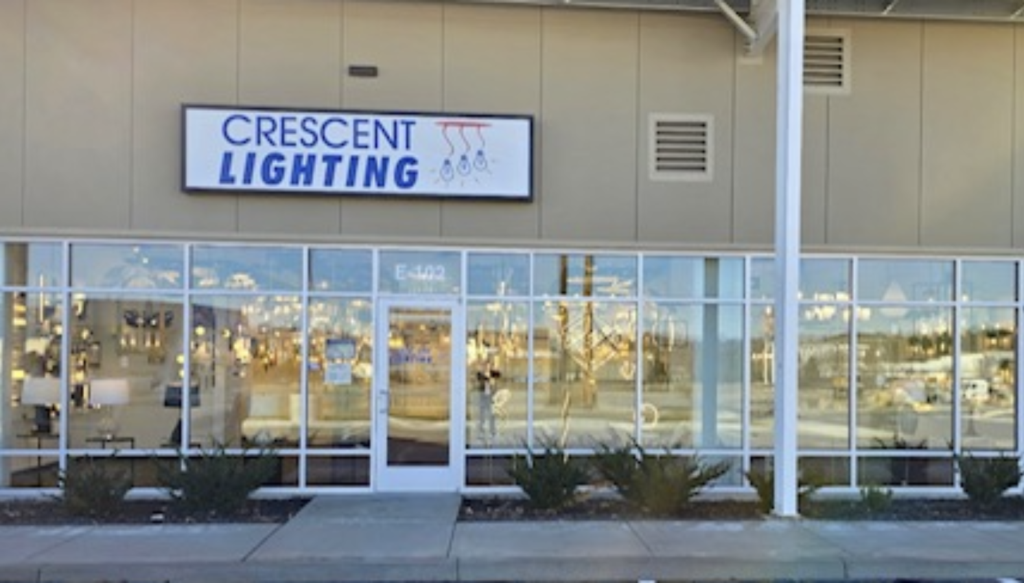
Linda Longo: I know you bought Aztec Lighting in Arizona last June and the Chuckanut Lighting showroom in Washington State in the fall of 2024 and, of course, you have the Crescent Lighting showrooms in Washington. What makes a finance guy become interested in lighting — especially since the industry grapevine says the brick-and-mortar showroom business is in danger of dying off. Tell me why that’s not so.
Grant Jones: Actually, by background, I’m a building materials guy. My grandfather [Don Jones, Sr.] started a concrete manufacturing and distribution company [Willamette Concrete Products] and so I’ve been around building materials and contractors all my life. That is really my roots. I grew up in the family business and eventually took over as CEO. I am the third generation, but unfortunately my second-generation parents, aunts, and uncles couldn’t decide on how to recover the business coming out of the Great Recession so I led the company through a sale process. And so my career has sort of ebbed and flowed. When I was approached about acquiring Crescent Lighting back in the summer of 2020, it was an intriguing opportunity to effectively put my immediate family’s band back together. Fundamentally my wife and I own the majority of the company, but I brought my dad and my brother and one close family friend together and said, “Hey, we know squat about lighting, but we know this business model really well. We know what it’s like to sell to contractors. It’s just a different widget that has a design and retail flair to it.” They said, “Look, we don’t know anything about this industry, but if you like it, we like it.” And that’s how my journey into lighting started, and it’s been a wild ride.
LL: The summer of 2020 is right in the middle of the pandemic. I know we’re going over ancient history, but walk me through that process.
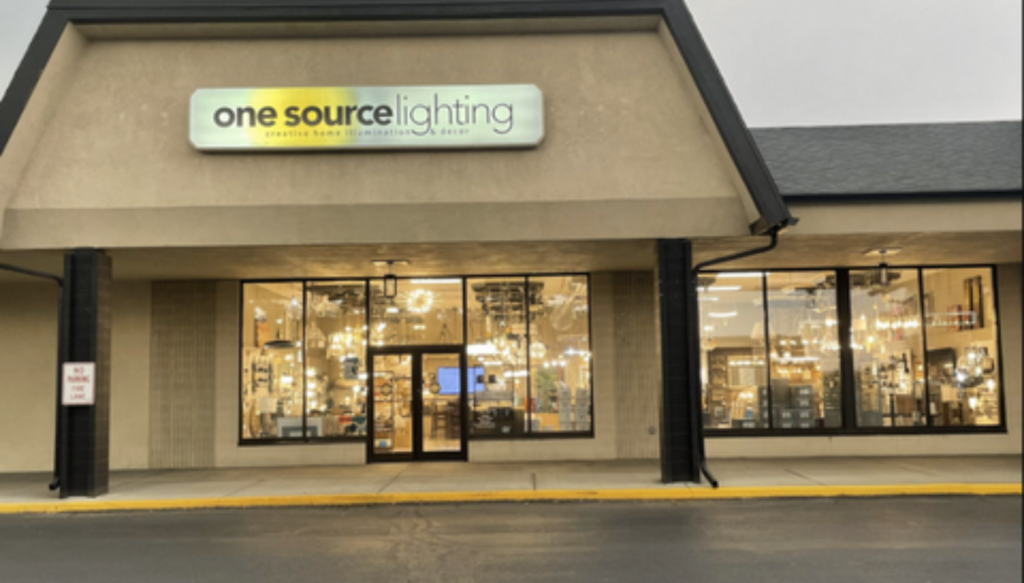
GJ: So Crescent Lighting had two showrooms and a warehouse east of Seattle. Everybody on staff stayed, and even the owner stayed for six months just to help with the transition because, again, I didn’t know anything about the industry itself. [The acquisition] closed in February 2021,and the owner stayed for almost the whole year of 2021. He helped by coaching and mentoring us. Then I acquired Olympia Lighting later in 2021, which gave us our third showroom in Washington — and that offer came out of blue. The owner of Olympia literally called me and said, “Hey, I heard you bought Ray’s business, do you want to buy mine?” I was thinking, “My feet are barely underneath me, but sure let’s have a conversation.” And that is how this [business growth] happened. One Source Lighting is our fifth lighting acquisition.
LL: Do the showrooms keep their existing names?
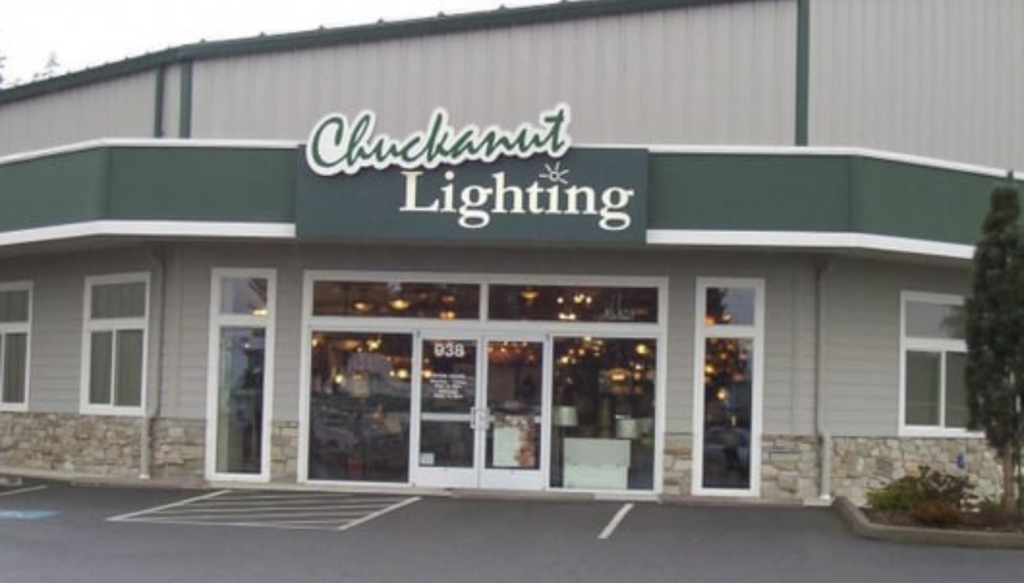
GJ: That’s been our m.o. We’ve kept their names because we believe each brand has brand equity in the cities they serve. We have Crescent Lighting in three communities and we have Chuckanut – which is just a one-location showroom – and then we have Olympia Lighting, which is also just one location. Then we acquired Aztec Lighting, which is the largest distributor in Arizona, and kept that name as well.
LL: You announced the acquisition of One Source Lighting in Montana a few weeks ago. How did you know that Lauri Patterson was interested in selling? I’m guessing that your name is being mentioned when someone wants to exit the business?
GJ: Yes, I’m getting introduced — mostly by reps or manufacturers. I’m making zero outbound calls; they just find me. It’s all about relationships. Fortunately, I can’t even go to the Dallas market without getting pulled aside in a hallway by someone saying, “Hey, I heard you were interested in this city or that city or this company or that company.” It’s great and it’s flattering. I basically, at all times, have at least one acquisition that I’m evaluating. Right now, I’ve put some of those on pause because I’m just trying to kind of settle with what we have. I’ve digested a lot in 2025, but they just keep finding me.
LL: So far most of your showrooms are in the Pacific Northwest, although you have the one in Arizona and now Montana. If an opportunity comes along anywhere in the U.S., would you consider it or do you want to have a tighter radius?
GJ: I get asked that question a lot. Generally speaking, I would prefer the west half of the U.S., just so it’s a little easier. I have relatively young kids, so I don’t want to spend my entire life on an airplane. However, something from The Rockies west or so would interest me. I can’t say I’ve considered opportunities east of that because mostly I haven’t been that interested. I think there’s a lot of synergy to be made on just staying on the western half of the country. Never say never, I guess.
LL: Tell me, in the age where it seems like people are moving away from brick and mortar, what makes a lighting showroom still a great business?
GJ: I think fundamentally the idea of brick-and-mortar retail is dying, and nothing’s changed there. I don’t have any kind of contrarian belief to everybody else in the industry. I just think we have to reimagine what that means. To me, it’s more about the experience that consumers have when they come into a showroom. They’re not necessarily coming in with the idea that they’re going to walk out with something that day. They want to come in and have a consultative experience that may last many, many touch points, not just a transactional walk-in and walk-out with a product. To me, I find that businesses that are more designer- and contractor-focused to be much more interesting than those that are purely retail. If they’re purely or mostly retail-focused, I find that to be less interesting because I think that’s a much, much harder path forward. Those who are focused on a repeat B2B customer will continue to have significant opportunities long-term.
LL: I’ve been covering lighting for 30 years and have heard it said many times that consumers will replace a lighting fixture maybe every 10 to 20 years. So I can understand that you’re not going to get a lot of repeat business from the same homeowner on average.
GJ: So that’s where we’re focused regarding acquisitions, with those [showrooms] that have a substantial B2B presence and not just dependent on a B2C consumer.
LL: Is online part of your equation at all, or does it not matter as much?
GJ: We’re focusing heavily on it in 2026. We just didn’t have the infrastructure or the talent internally to help before. But late in 2025, I hired a director of sales who comes from 15 years of e-commerce in our industry specifically. One of his goals, and part of his job duties, is to help us build out our e-commerce presence. We have no interest in being in this national e-commerce juggernaut. There are plenty of those guys out there. But where we can be a greater buy local, service-oriented e-commerce play in the cities we’re already in, to me, that’s an interesting niche we can carve out for ourselves.
LL: In OneSource’s case, it sounded like Lauri Patterson is staying on with the showroom. Is that correct?
GJ: Absolutely. I wouldn’t have considered it if she wasn’t. She’s a tremendous person with a wealth of knowledge and amazing relationships. She’s really just focusing now on her customers and the relationships she has and shed the back-end office stuff that she didn’t enjoy doing. And of course, we’ve got great systems and processes and people in place for that already so she can do the stuff she loves to do like lighting design. It’s really a win-win.
LL: That’s a lot of showrooms to oversee. How are you able to juggle it all?
GJ: It sounds cliche, but it’s all about hiring great people. I mean, some have come along with these acquisitions and I’ve been able to reposition people’s roles and responsibilities. In other cases, I’ve recruited people from the industry who can help. For example, this new director of sales – Peter Malcolm – was working in e-commerce for Coleto Brands and before that, he was with Lumens.com. He’s leading our outside sales team and our e-commerce strategy. Another person I hired was a long-time industry veteran who had been living on the East Coast and wanted to move to Seattle. After almost two years of going back and forth to find the right fit for her, she is now our regional showroom manager and all of our Washington showrooms report to her. So her job is just to make sure they’re staffed, well-merchandised and have that wow experience that we’re going for. I’ve been lucky to hire incredible people, and that allows me to focus on the strategic aspects of the business while the great people can just focus on the tactical side.
LL: Speaking of staff, how do you keep employees happy and motivated?
GJ: I think for us, we have a very clear vision, purpose statement and values. We know what we believe in and I think, generally speaking – and it doesn’t matter what industry – everyone wants to be part of something bigger and better than themselves. I think everyone’s buying into the vision that we’re going to continue to grow as professionals and as people. I think people want to be part of the journey we’re on, and not the stagnant old way that lighting used to be. We’re kind of changing the way business is done. Those who’ve chosen to stay are excited to be doing something new and different and not necessarily the way lighting’s been done for the last 20, 30 years of their career.
LL: The industry has changed as well, with the advent of LED and smart lighting. We’re not just doing incandescent bulbs anymore.
GJ: You’re right. You know, I agreed this year to join an ALA committee and I think one of the mistakes I made early on was not getting involved at a more national or industry level because we do need to change as an industry and I think it’s on all of us – especially as CEOs, owners and presidents of these lighting companies – to get involved and be part of the solution. That’s why I decided to jump into the deep end and be part of the voices of change. The rising tide impacts all of us and so, to me, that’s the other piece that I’ve changed my philosophy and mindset on. I want to get more involved and not be one of the ones sitting back and complaining about how things are changing. That’s an area that I’m focusing on for 2026: to join an ALA committee and attend as many shows as I can because I’m the new guy in this industry. I’ve been in this business five years – January 31st was my five-year anniversary – and I still have so much to learn and this industry is moving so fast. If I don’t choose to participate, it’s going to pass me by. Other than that, I’m having a blast learning every day and being surrounded by great people and just figuring out how can we incrementally get better 1% every day. That’s what drives me.


Great motivation, love his ambition! Love that he is keeping lighting showrooms alive.
I agree, Carla!