By Julie A. Palm Generation Z may be digital natives, constantly connected to their electronic…
Read More →
By Julie A. Palm Generation Z may be digital natives, constantly connected to their electronic…
Read More →
Surprise! More than half of “mature singles” and “couples” said they prefer to rent —…
Read More →
The founder of Conceptual Lighting believes most people under light or over light their homes…
Read More →
Maxim Group and Kichler are the two lighting brands featured at the reimagined Design Hub…
Read More →The new decorative lighting company targeting the high-end residential market launched at Lightovation last month.
What happens when a self-described “failed art student” spends 15+ years in the lighting industry with sales management experience that runs the gamut from technical (Toshiba and Leotek) to decorative (Arteriors and Leviton’s Birchwood brand) and rep agency management (Bell & McCoy Lighting & Controls)?
The answer is the debut of the decorative lighting company Phaino (pronounced fine-o, the Greek word that means “to bring light”), which was officially unveiled during January Lightovation in the Spectrum shared showroom.
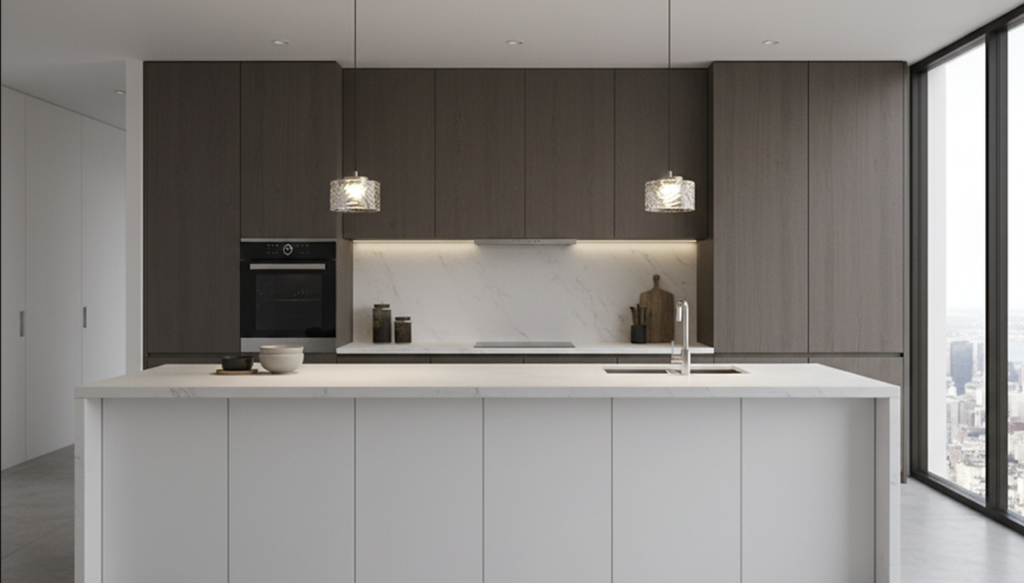
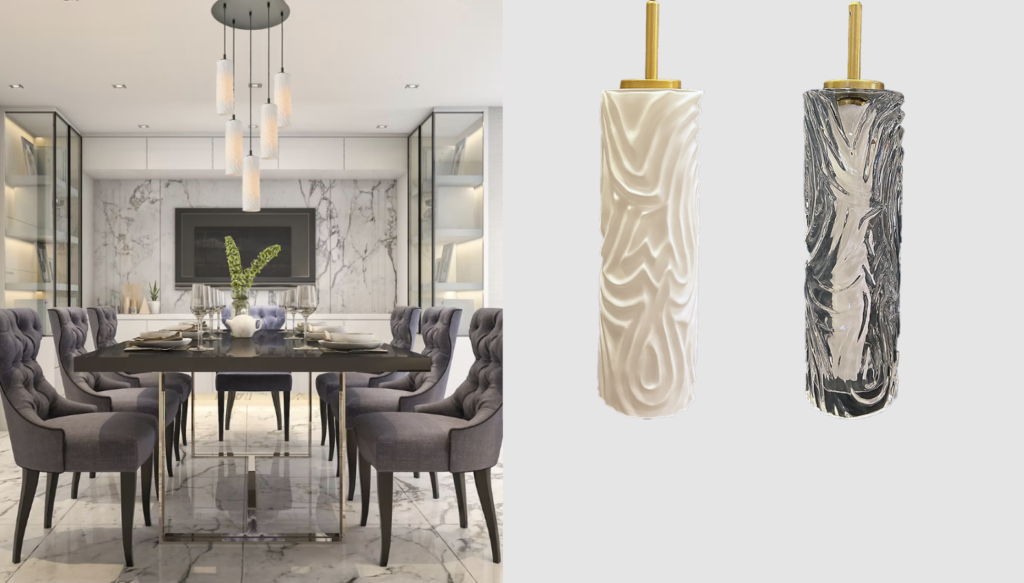
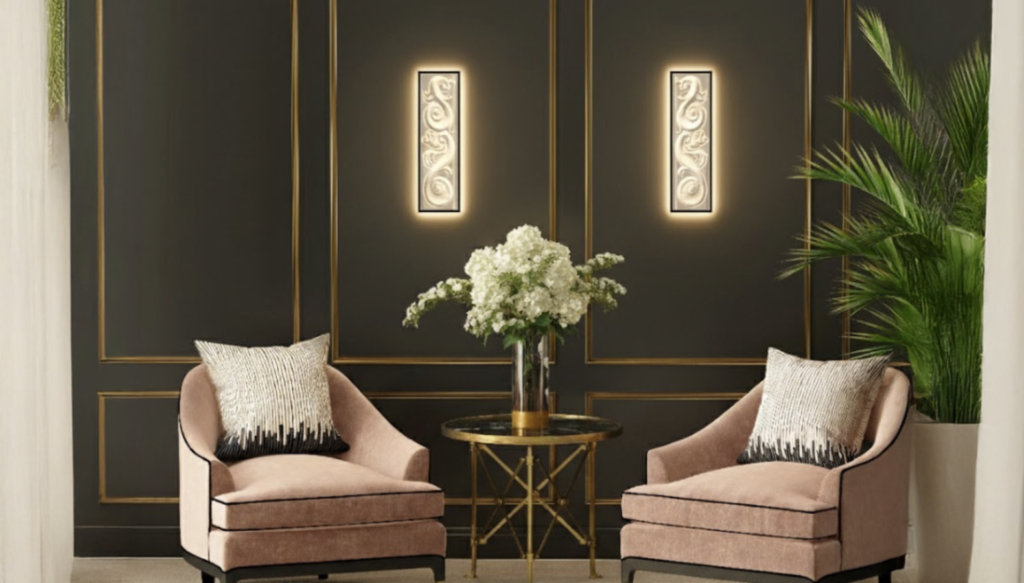
That fine art student, who also earned an MBA from the University of Houston, is none other than lighting industry veteran Chris Berumen. Tired of observing a lot of “sameness in the marketplace” over the years, he decided to go back to his artistic roots with the goal of creating a line of decorative lighting fixtures that offer a fresh take on familiar shapes. For example, Berumen started with a simple glass cylinder pendant. He wondered, “Wouldn’t it be more interesting to look at if it had a little contour or texture?”
Drawing on his sculpting background and using his garage as a studio, Berumen began the tedious work of sculpting molds out of plasticine clay to become blown glass shades. After much trial and error, he created several designs he liked and searched for a manufacturing partner that could produce his work on a larger scale. His prior experience with integrated LED technology made the functionality of his designs a priority instead of the after-thought it can be with some decorative lighting companies that are primarily focused on aesthetics.
This is all a lot easier said than done, of course, regardless of artisan skills. “I wanted the shade to give the appearance of movement across a surface,” he said. “So I spent a few months sculpting what I thought would be an interesting little fingerprint design. I found a manufacturing partner that not only could do it, but also offered variations such as multipoint canopies as well as sconces.”
What makes Phaino different
Coming up with a twist on design is just the beginning; there are other distinguishing factors that make Phaino lighting fixtures stand out. “Yes, there is the difficulty in the sculpting process, but there is also the investment in the molds since these aren’t common molds,” Berumen said. “For example, for the Francesca pendant – which has a 27.5-inch glass dome available with three kinds of glass – it took quite a few months to sculpt it. People have asked me, ‘Why not use 3D printing?’ and while 3D printing is an option, it doesn’t give the same organic form and flow and uniqueness that you get from interacting with a medium and material.”
He explained, “If, when creating a mold, there is an area that you don’t quite like, you have to recreate it. There is a lot of tinkering. For the swirls-upon-swirls pattern, it’s a matter of getting all of the swirls even throughout the whole shade. That is really challenging when you’re not using a lot of mechanical tools. You could use AutoCAD to get it all the same, but it won’t have this nice sort of interesting feel and texture to it; it would be just uniform.”
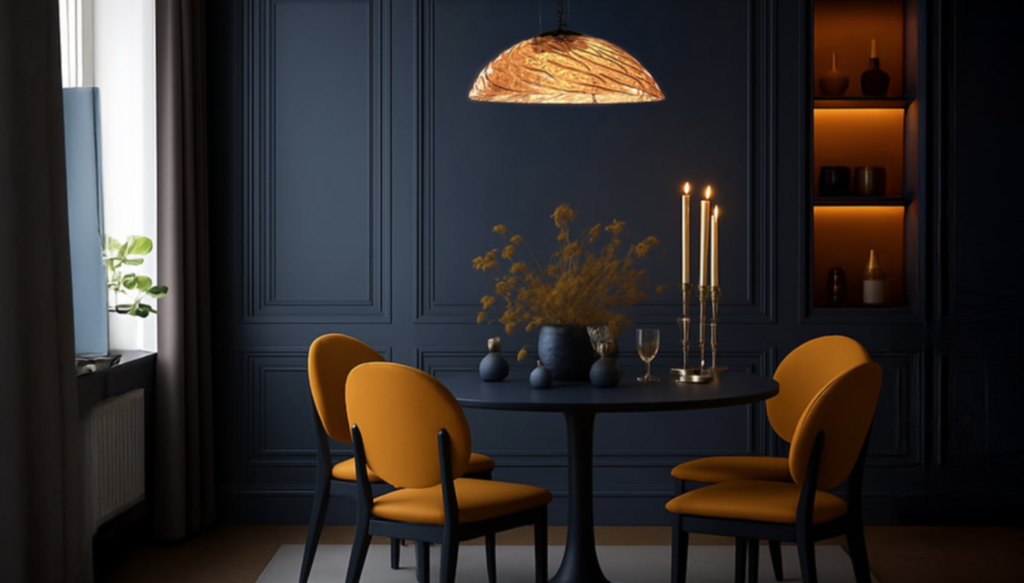
The sculpting part is not the only difficulty. “This is going to sound silly, because it’s not what you think of as a design talent, but getting the finishes correct was a huge challenge,” Berumen stated. “You’d think it’s just a spun dome, but we went through probably seven different iterations and finishings partners that we had to work with to get the finishing right. What we settled on was a version of electroplating that is common to the plumbing industry. You can’t get the depth of color and the richness that we were hoping to get by using the standard anodizing process, and powder-coating doesn’t do metallics very well. I mean, powder-coating is okay, but not anything that is very interesting or appealing. That is why we went to this electroplating process — and one of the happy little side effects of that is that there is an inherent scratch and wear resistance to the coating,” he said, adding, “This makes it really good for restaurant applications, where a pendant over a dining table for example, is going to have to be wiped down, washed and dusted with some degree of regularity. This finish will resist scratching and damage from abrasives [more than another finishing method].”
Not to mention that the electroplating process is approximately double the cost of anodizing, according to Berumen’s estimate. There is another benefit: consistency.
“When it comes to a batch – for example, a batch done at the end of January compared to one done in April – that batch-to-batch consistency is better with electroplating,” he noted. “With anodizing, there’s not a whole lot of variation between batches, but there is more variation than what we experienced with electroplating.”
Getting the word out
Judging from the reaction to Phaino’s debut at Lightovation from showrooms all over North America, Berumen is optimistic about the fledgling company’s success.
“There was interest at the show, but what I didn’t expect is all of the calls we’ve been getting for weeks afterwards on a daily basis from showrooms wanting information. We’ve had interest across the U.S. as well as Canada and South America,” he remarked. “There were also some showrooms at Lightovation from Mexico, Ecuador, and the Caribbean that expressed interest in the line for their high-end residential clients as well as for their resort clients.”
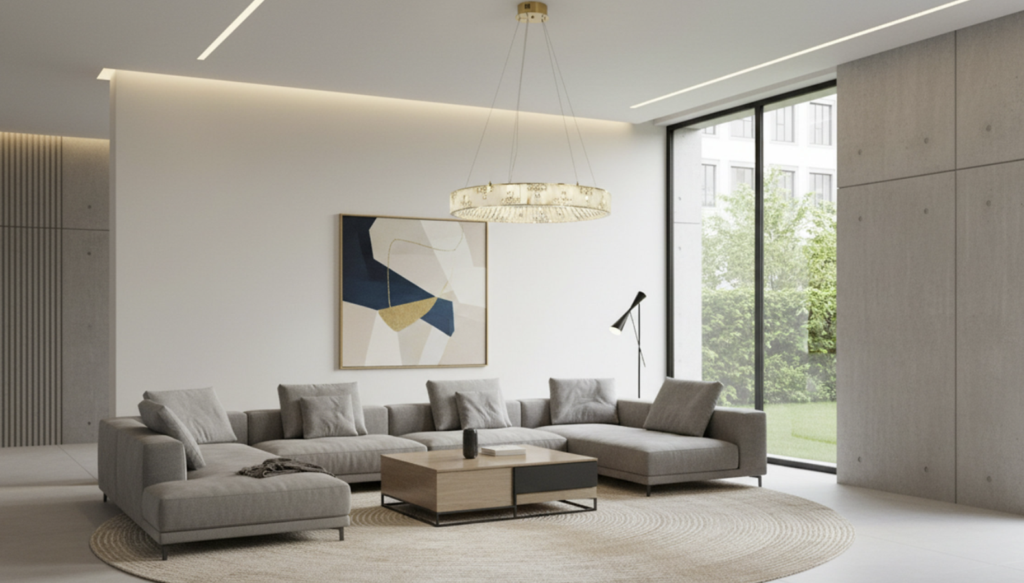
Phaino is in the process of building its rep force. “Right now, Richard Alan & Associates is our biggest rep agency on the showroom side,” he noted. “It’s impossible to launch a new venture without having the support of friends, so that’s the route I took [people I’ve worked with in the past],” he said. On the architectural side, Berumen has contacted clients from his Birchwood Lighting days. In fact, some of Phaino’s linear fixtures and floor lamps are designed with the architectural community in mind. “Our main focus is the high-end residential market and the hospitality sector,” he stated.
Phaino will be expanding its presence at trade shows in the upcoming year to increase brand awareness in those areas. It will also maintain its Spectrum space in the Dallas Market Center for June Lightovation. Since Berumen resides in the Dallas area, appointments to see the line in the showroom can easily be accommodated.