A new trends report from the NKBA says highly functional lighting will support kitchens designed…
Read More →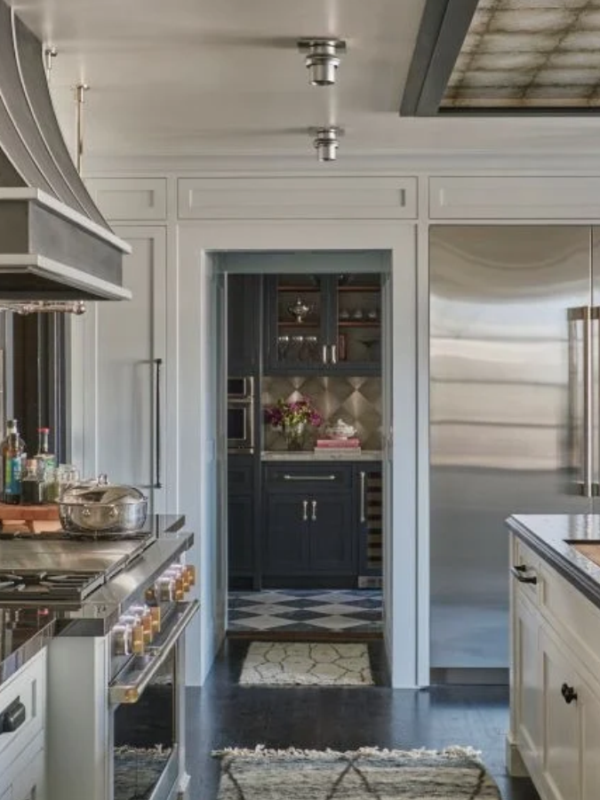
A new trends report from the NKBA says highly functional lighting will support kitchens designed…
Read More →
While the focus at market is on product introductions and trend directions, it’s also an…
Read More →
The domestic manufacturer debuted the initial lighting launch with interior designer Christopher Todd during High…
Read More →
Interior and product designer Michael Wolk reconnects with Fine Art Handcrafted Lighting for Lomond, a…
Read More →A new trends report from the NKBA says highly functional lighting will support kitchens designed for zoning, concealment and integration.
By Julie A. Palm
Kitchen designs are becoming even more zoned and deliberate, according to the 2027 Kitchen Trends Report from the National Kitchen & Bath Association (NKBA) — and that helps explain the report’s prediction that highly functional fixtures will be the most significant lighting trend in the next three years.
But that doesn’t mean that decorative lighting will disappear as consumers will continue to want layered lighting that “supports ambiance, task performance, visual comfort,” says the report, which was drawn from a survey of industry designers, manufacturers, remodelers and architects.
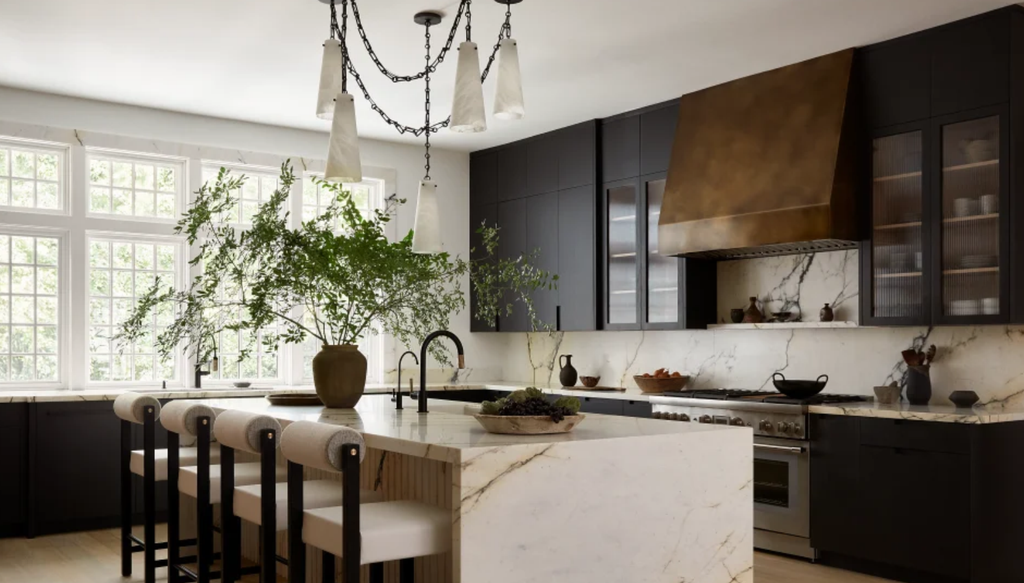
Before we dive into the lighting details, here are some overarching design trends that will influence lighting choices for the kitchen:
• Open-floor plan kitchens are becoming a little less open, with the addition of operable partitions, partial walls and more defined zones
• Along with that, more flexible transitions between open and enclosed spaces are allowing people to adapt their kitchens for changing needs
• The move toward concealment continues with expanded pantries, cabinetry and even back kitchens
• Appliances are being better integrated through placement, panel depth and other concealment strategies
• Mudrooms and laundry rooms are becoming part of an integrated kitchen “ecosystem”
“For the past several years, we’ve seen the kitchen expand in size. The 2027 Kitchen Trend Report reveals that this evolution is continuing, with the kitchen extending into more areas of the home,” says Bill Darcy, global president & CEO of NKBA. “While the kitchen has always been the ‘heart of the home,’ that idea has taken on new meaning. From mudrooms and laundry rooms to back pantries and personalized work zones, the report shows that we’ve entered a new era of what the kitchen can do for homeowners — solving real problems, adding home value and elevating the way we live.”
Function over form
What stands out: concealment, defined zones, flexibility, integration — which brings us to those lighting trends.
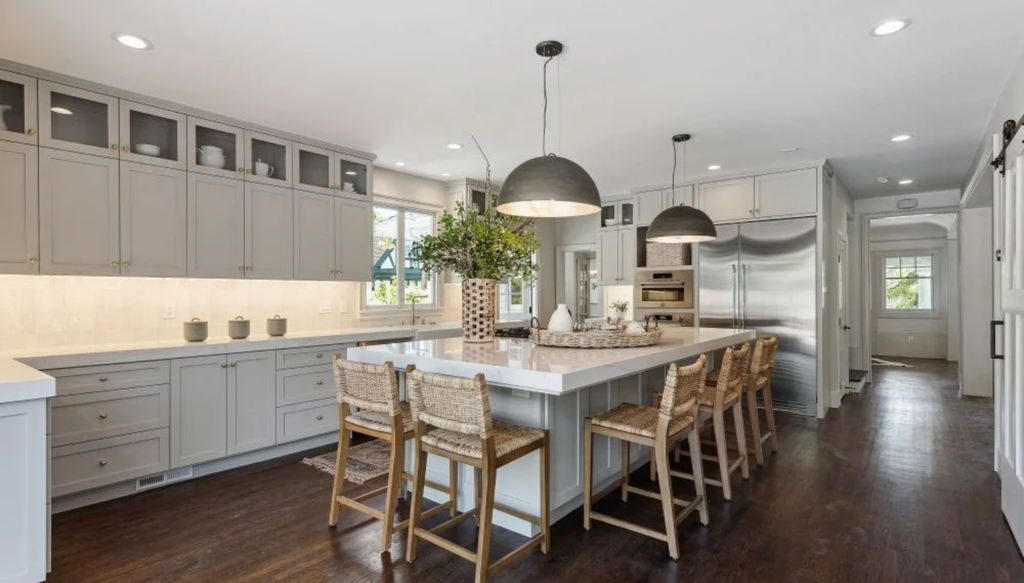
When survey respondents were asked, “Which kitchen lighting fixtures do you expect will be popular over the next 3 years?” 87% said under-cabinet lighting. Interior cabinet lighting was cited by 76%, recessed lights by 57% and floor/path lighting for nighttime by 52%. Not one type of decorative lighting was cited by a majority of respondents.
We see a similar overarching theme in survey respondents’ answers to this open-ended question: “Where do you expect to see change in kitchen lighting over the next three years?” The No. 1 answer, cited by more than three-quarters (77%) of respondents — was lighting controls.
When drilling down into the subject of lighting controls, the survey asked, “Which kitchen lighting controls do you expect will be popular in the next three years?” Half of respondents said those connected to mobile devices and nearly half (49%) said those controlled by motion sensors. Slightly less important in the coming years will be programmable settings (40%) and voice-activated controls (34%), according to the report.
What about decorative lighting?
None of this means decorative lighting isn’t important, too. A showstopping fixture over the island, well-placed sconces and tiny flush-mounts instead of some of recessed lighting help give a kitchen personality and elevate the space.
The survey asked about specific trends in decorative lighting fixtures and the responses are in line with what we saw in lighting showrooms at the recent High Point Market and in conversations with manufacturers and interior designers. There’s a move toward matte/satin/brushed finishes, natural materials like wood, and warm metals like brass, copper and gold, as well as earth-toned paint hues.
The growing role of lighting
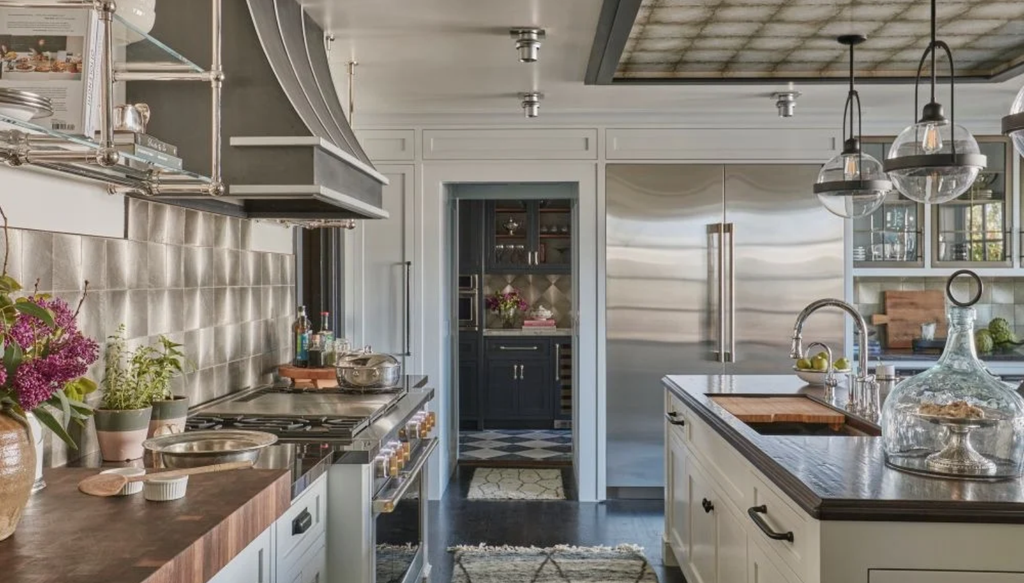
Some 84% of respondents agree that “Kitchens are incorporating multiple layers of lighting to create a more dynamic environment” and 78% agree that “lighting is increasingly used as a design feature than just a functional necessity.”
That last statement may seem to contradict other survey results, but I don’t think it necessarily does. It may mean that specialized functional lighting fixtures, like those under cabinets or along paths, can also be used to create mood and drama in the kitchen. In fact, 75% of respondents agreed that “lighting is being designed to support different moods and activities throughout the day” and 73% agreed that “lighting is being designed to influence mood, behavior and well-being.”
I think one of the most important takeaways from the report is this: Lighting has always been important in a kitchen – it’s where designers and builders spend a large portion of any lighting budget – but the increasing use of specialized task lighting and control systems is enlarging its role even more.
Lighting, the report says, is increasingly “a primary design layer, not an afterthought.”
Related articles