By Julie A. Palm Generation Z may be digital natives, constantly connected to their electronic…
Read More →
By Julie A. Palm Generation Z may be digital natives, constantly connected to their electronic…
Read More →
Surprise! More than half of “mature singles” and “couples” said they prefer to rent —…
Read More →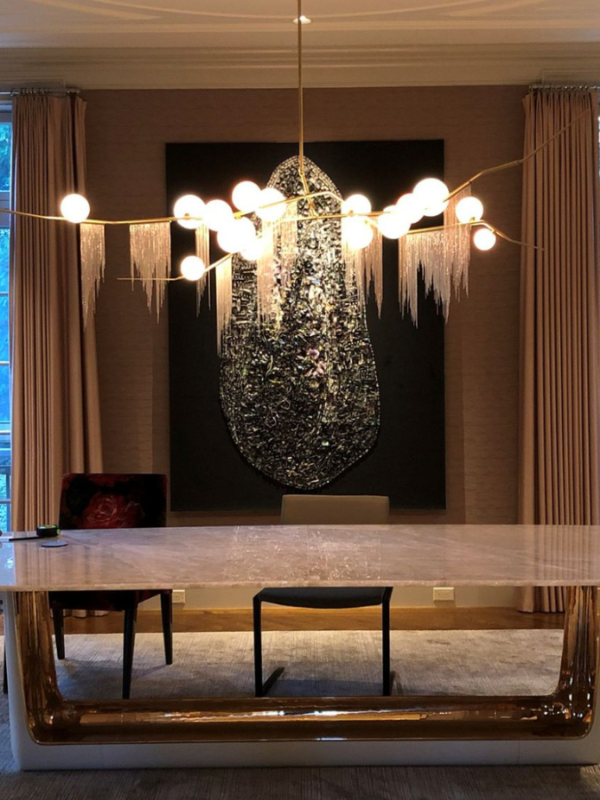
The founder of Conceptual Lighting believes most people under light or over light their homes…
Read More →
Maxim Group and Kichler are the two lighting brands featured at the reimagined Design Hub…
Read More →“You’ve got to look at the floor plan and say, ‘Where can I make a statement? Where would amazing lighting level up the design of this house?’” says the founder of Peltier Interiors.
By Julie A. Palm
When prioritizing where to invest a client’s budget on lighting fixtures, Amy Peltier starts with those for the dining room, over the kitchen island and in the entryway — especially when ceiling heights allow for something dramatic. Next: the primary bath and the powder room.
But a home’s architecture can provide opportunities to do something special with lighting in other spaces, too, says Peltier, founder and creative director of Peltier Interiors.
“We just did this new build in Tennessee and from their main living spaces to their back door, they have this beautiful, tall-ceilinged hallway and it was a chance for us to put a row of gigantic pendants,” she says. “It was a big part of their lighting budget, and it looks spectacular. … It’s a space they walk in day in and day out, so it felt worth it in the big picture. You’ve got to look at the floor plan and say, ‘Where can I make a statement? Where would amazing lighting level up the design of this house?’”
Peltier Interiors, with a team of five, is based in San Marino, California, and has a second office outside Washington, D.C., in Northern Virginia, where Peltier resides. The firm focuses on a mix of new residential construction and renovation, plus furniture buying.
“Sometimes clients will buy a new home and they want us to furnish it. It’s a blank slate for them,” she says. “So, we’ll come in, maybe change out light fixtures, add wallpaper and paint and do the furnishings.”
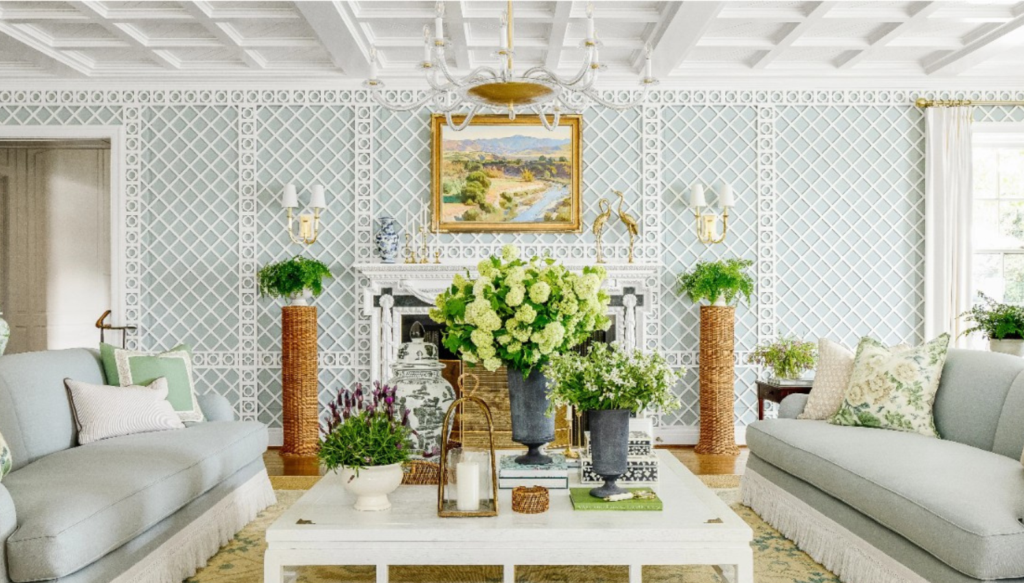
For example, Peltier states, “We have a California client who lost their home to the fire,” she continues. “Instead of rebuilding their home, they just decided to buy new … and it’s a beautiful house, really great features to it. … It has nice fixtures but not designer light fixtures, so we’re coming in and putting that in. I have a condo (project) on the East Coast — a really high-end condo — and the light fixtures look fine … but we went in and made them extra special.”
Lighting design directions
Although Peltier placed large-scale pendants in the hallway of the Tennessee home, she says, in general, she sees pendants getting smaller. She recently switched out large globe pendants in her own kitchen to “something a little daintier and a little lighter.”
She explains, “I think that for a long time, light fixtures were taking over and really, truly were the statement piece. Now they’re just this perfect, wonderful complement. They don’t need to be the star of the show, but … they certainly need to complement the space perfectly.”
Peltier also sees growing interest in more natural, organic materials, including rattan shades, as well as more natural-looking brass and bronze finishes, and “lots of curves and swoops, which I love,” she says.
She also appreciates lighting manufacturers who are giving designers more ways to customize fixtures and lamps through painted finishes, shades and other elements. “Those customizations are just starting and are really fun, and I think you’ll start see a lot more of that.”
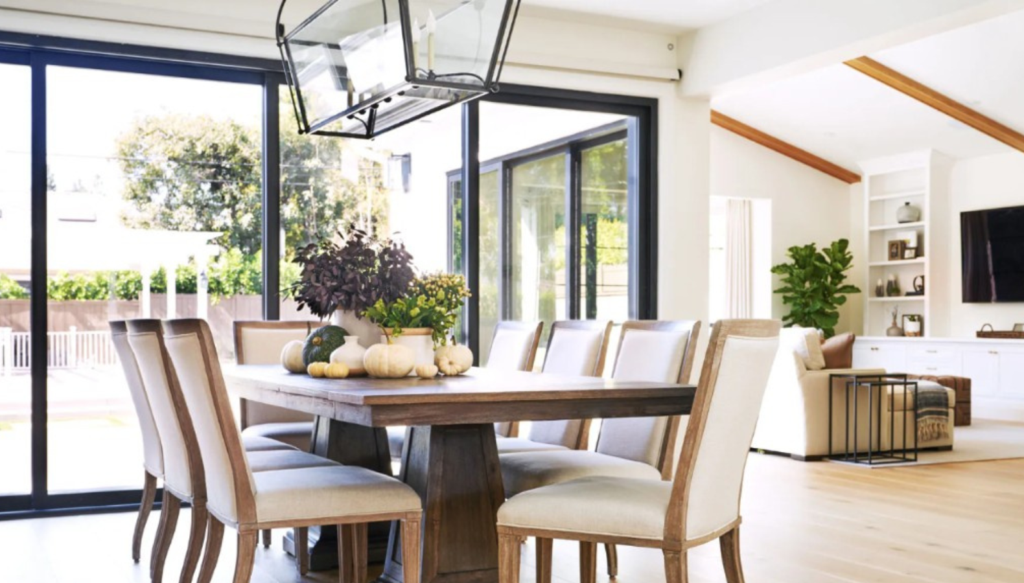
Many of Peltier Interiors’ projects incorporate Lutron lighting control systems. “It’s all about creating a mood,” she says. Clients love the ability to control lighting from their phones, though Peltier notes that the systems can complicate lighting installation. “We always bring in a specialist for it,” she says. “We lay out our lighting plan, and they take that plan and make it work.”
In addition, Peltier says, “the overall general illumination in the recessed world has really uplevelled itself in the past three-ish years, so I think that’s really interesting. It’s becoming much more architectural and advanced.”
Peltier says she likes the new square recessed lights, as well as smaller sizes that are now available, allowing them to “almost disappear.” She’s also embracing the idea of occasionally subbing out recessed lighting for small flushmounts, say above a kitchen sink.
Peltier appreciates the one-stop shopping available at some of the larger luxury lighting brands but also likes the offerings of companies such as Arteriors and Jamie Young Co., which offer lighting but also other home furnishings.
Her firm also buys from Minka-Lavery “or sometimes we’ll go to Hubbardton Forge if we’re looking for something a little more modern,” Peltier says. “… And Rejuvenation has great light fixtures that are historically accurate.”
“So, there’s a lot out there,” she says. “Sometimes you have to dig a little bit more but … these brands have light fixtures that are really cute, unique and pretty.”
Sourcing
There’s an adage that interior designers attend furniture shows like High Point Market to see how upholstery “sits.” But Peltier says that while she often buys lighting online, she benefits from seeing fixtures in person.
“Lighting is so three-dimensional, it can be really hard, even for us as designers, to visualize,” she says. “We can spend a lot more time thinking about the space that a light fixture takes up (than we do) thinking about the space a sofa takes up, because that’s pretty standard.”
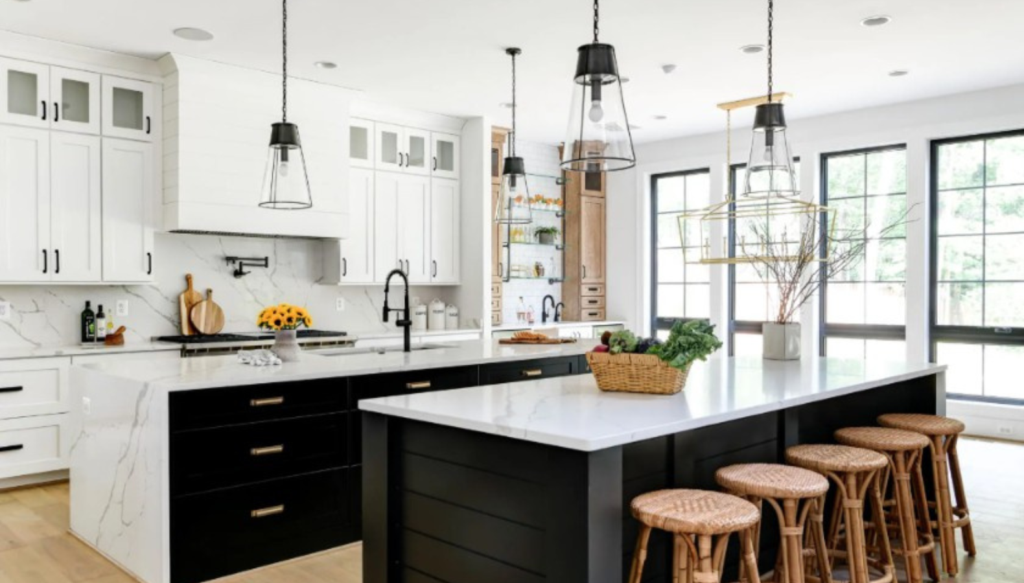
While Peltier admits to occasionally browsing lighting at her local Ferguson dealer, where her firm buys plumbing fixtures, she finds that it can be hard to wade through the options. She says what would make the selection process easier is if local lighting showrooms would “organize a little more by vendor and price point,” allowing her to easily bypass builder-grade options and find the right fixtures for her clients.
Peltier enjoys choosing lighting fixtures; lightbulbs not so much.
“We spend most of our time in lighting choosing light bulbs. That’s a whole beast in itself,” she says, adding, “in my studio in California, we must have over 50 bulbs in our back storage room because we’re constantly buying and then saying, ‘That’s not the right bulb.’”
Her solution: a designer in her West Coast office who is a “master of lightbulbs,” plus help from artificial intelligence. “We use ChatGPT to help us understand what we should be buying because it is so complicated,” she says.
“I just installed a vintage flush mount fixture, and we had a serial number … but I had no idea what kind of bulb it was,” she explains. “… We were able to put the serial number into Chat. … It got the globe size wrong, but it put us on the right path.”
Sourcing takes much of a designer’s time, and efficiency is important. But the goal, Peltier says, is always to find the right fixture to elevate the space.
“I always remind clients,” she says, “that it’s another piece of art.”
Related articles
