The domestic manufacturer debuted the initial lighting launch with interior designer Christopher Todd during High…
Read More →
The domestic manufacturer debuted the initial lighting launch with interior designer Christopher Todd during High…
Read More →
Interior and product designer Michael Wolk reconnects with Fine Art Handcrafted Lighting for Lomond, a…
Read More →
More than 60 lighting designs and 45 pieces of art will make their debut at…
Read More →Jay Schneider, senior editor of Pro Remodeler magazine, shares his research on the lighting sector.
If you missed the June Lightovation panel discussion “Making the Most of the Remodeling Boom,” sponsored by the Dallas Market Center, here are some of the takeaways that senior editor Jay Schneider of Pro Remodeler magazine provided, featuring his own research on how remodelers view lighting showrooms.
First, to recap the most recent statistics from the National Association of Home Builders (NAHB), residential remodeling activity is expected to increase 3% in 2026 and an additional 2% in 2027.
The reasons for the increase in remodeling activity fall into three areas: homeowners’ reluctance to give up their low mortgage rates; home prices are still at elevated levels; and the desire to modify their home as they age instead of relocating to a retirement community.
Schneider noted that the age of current homes is also a factor. Older homes not only need regular maintenance, but their architectural features can look outdated, and a room’s purpose can change over time as families and daily activities evolve.
“The median age of a home in the U.S. is 43 years,” he said, adding that the states with the oldest homes are New York (average age of 65), Rhode Island (60), Massachusetts (59), Pennsylvania (58), and Connecticut (57). “Homes in these states are ripe for remodeling,” he noted.
Schneider stated that younger homeowners are a major force in remodeling, citing a recent study that revealed 72% of homeowners age 33-40 completed a remodeling project within the past year.
Overall remodeling trends
While kitchens and bathrooms remain the most common remodeling projects, Schneider noted that another popular space is the primary suite — whether that involves a remodel of an existing room or adding a suite to the home.
“What’s gaining in popularity are upgrades, including the reconfiguration or addition of spaces to accommodate aging in place,” he explained. “For example, outfitting a full first-floor bathroom with a walk-in shower so there’s no need to climb stairs or converting first-floor spaces such as a dining room or office into a bedroom.”
There are also more subtle remodeling projects, such as reworking the entry points of rooms to better accommodate a wheelchair or creating an area just inside the front door to provide seating for those who need to rest immediately after entering the home.
By the same token, primary bathrooms – regardless of whether they are on a first or second floor – are being remodeled to accommodate future aging-in-place needs by adding large curbless showers, grab bars and vanities that can accommodate a wheelchair.
“It’s important to note that more households are becoming multigenerational, so the aging-in-place remodels can accommodate older parents living in the home now and then the younger homeowners as they age,” Schneider said. “Similarly, young adults are moving back in with their parents, so that new first-floor full bathroom and bedroom can be used by them and give them privacy.”
Schneider noted that ADUs are being increasingly talked about, and desired, by homeowners. “These accessory dwelling units are being used to address multigenerational households,” he explained.
The acronym ADU might be unfamiliar to some; it refers to the type of space that previously had been called an “in-law suite” or “carriage house” among other names. In short, ADUs – which can be either a separate building or an addition built onto the home – commonly have a kitchen, bathroom, bedroom and a separate entrance.
While incorporating wellness attributes into a home’s design is gaining traction on the ultra-high end of the market, it hasn’t been widely adopted yet, according to Schneider. “I’m hearing more about it, but this is still more of a niche item right now,” he said.
And even though the expansion of outdoor living spaces has been a big trend since the pandemic, there is still remodeling activity going on. “Outdoor living spaces – with patios, decks and pergolas, etc. – are receiving attention, and there’s a focus on creating indoor/outdoor living,” Schneider commented. “When talking about outdoor spaces, we are also including work on the façade and upgrades for curb appeal, such as new siding, windows/doors, and outdoor lighting.”
How remodelers view lighting upgrades
While Schneider admits that lighting is not a topic that his readers inquire about often, he has noticed more remodelers using layers of lighting and accent lights in their projects. “It’s no longer just a single ceiling fixture or recessed lights,” he said, adding, “Outdoor and landscape lighting design are definitely getting more attention.”
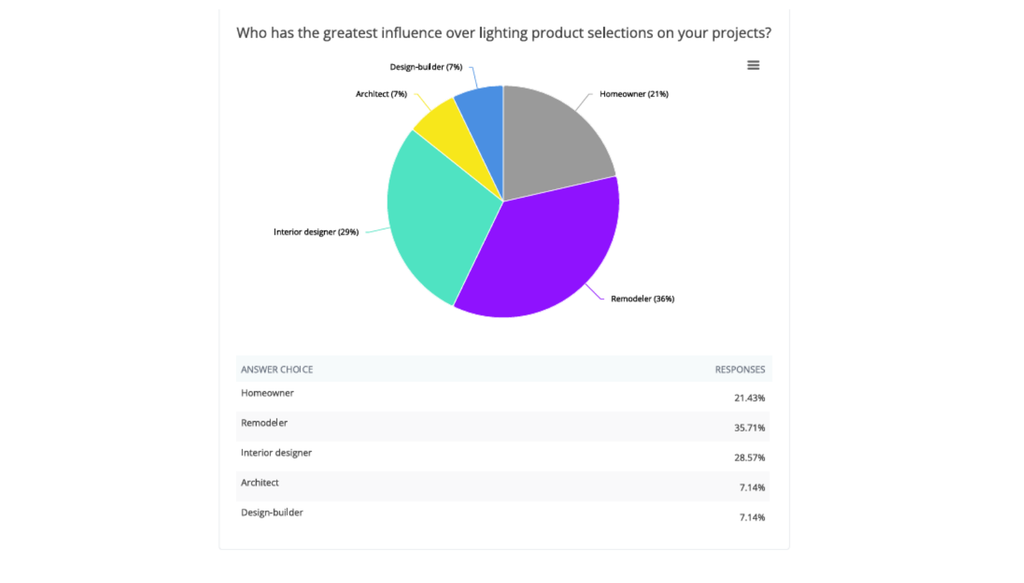
Schneider conducted a survey of Pro Remodeler’s readership this spring regarding their lighting knowledge. “The results were insightful,” he noted.
Among the questions Pro Remodeler asked were:
• When does lighting selection typically occur in your remodeling projects?
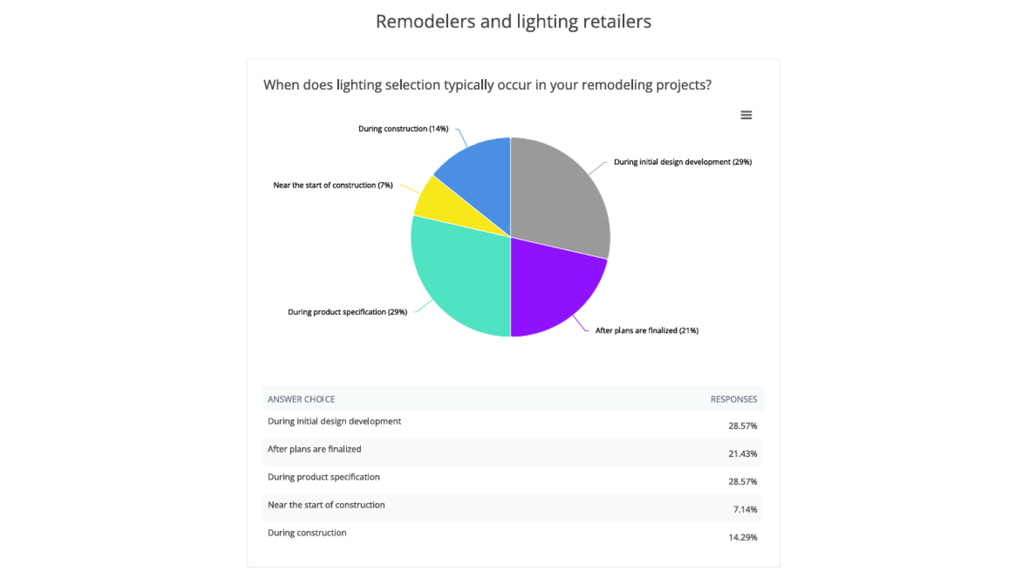
• Who has the greatest influence over lighting products selections on your projects?
• What is the biggest challenge you face when sourcing lighting products?

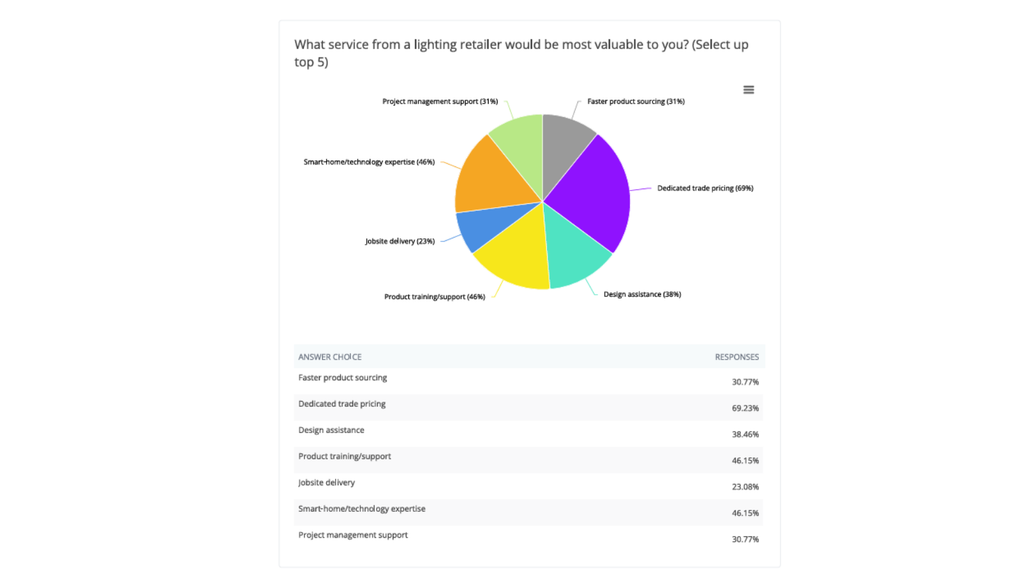
• What service from a lighting retailer would be most valuable to you?
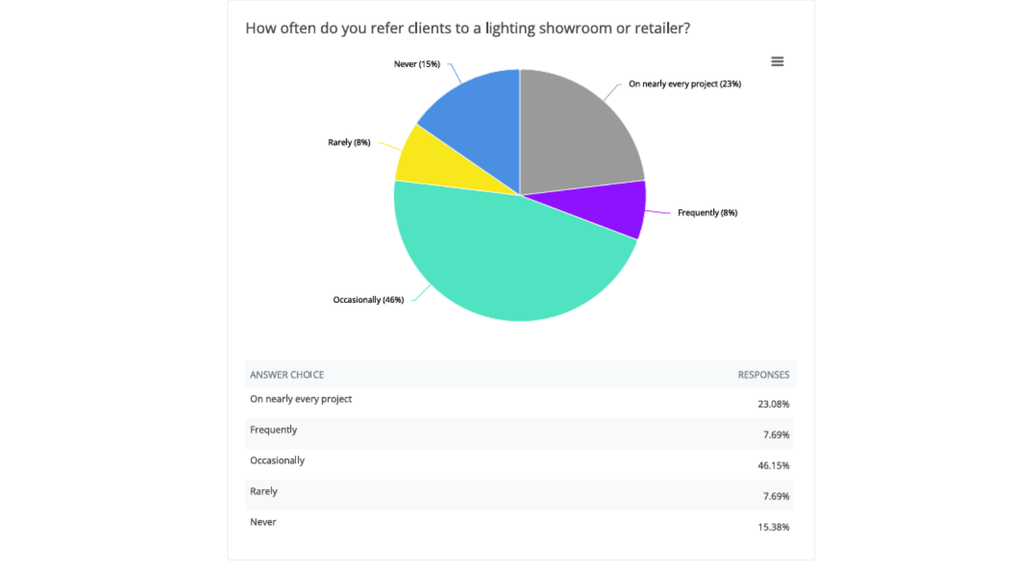
• How often do you refer clients to a lighting showroom?
• What would make you more likely to partner with a lighting retailer?

• What is the most effective way for a lighting retailer to earn your business?

• Where do you see the greatest opportunity for lighting upgrades in your projects?

Lighting showrooms should regard the respondents’ answers as a starting point for opening up – or expanding – conversations with their local remodeling businesses. Perhaps invite them to your showroom for a private event or an educational session that targets their needs. Or designate your outside salesperson to call on remodelers and introduce your showroom and how your staff’s lighting expertise can enhance their projects.
According to Pro Remodeler’s stats, 58% of remodelers cited “design/specification assistance” as a reason they’d partner with a lighting showroom. While better trade pricing was listed as a challenge, 46% said “product training/support” and “smart home/technology expertise” are services they ranked as “most valuable” to their businesses.
To connect with remodelers, become involved with your local chapter of the National Association of the Remodeling Industry (NARI) – there are chapters in 18 states plus the national group – as well as NAHB’s Remodelers group, or the many independent contractors and remodeling businesses serving your community.
Do you have advice on how your showroom successfully expanded its reach into the remodeling market? Share your tip with me at linda@homenewsnow.com.
In an upcoming article, we’ll hear from the other panelists who participated in the June Lightovation session – Gabriel Trinidad of Lighting, Inc. and Leslie Killingsworth of Progressive Lighting – on what has worked for their showrooms in expanding their business in the remodeling sector.
Related articles
Home Depot & Lowe’s Are Banking on Remodeling in 2026 — You Should, Too