By Julie A. Palm Generation Z may be digital natives, constantly connected to their electronic…
Read More →
By Julie A. Palm Generation Z may be digital natives, constantly connected to their electronic…
Read More →
Surprise! More than half of “mature singles” and “couples” said they prefer to rent —…
Read More →
The founder of Conceptual Lighting believes most people under light or over light their homes…
Read More →
Maxim Group and Kichler are the two lighting brands featured at the reimagined Design Hub…
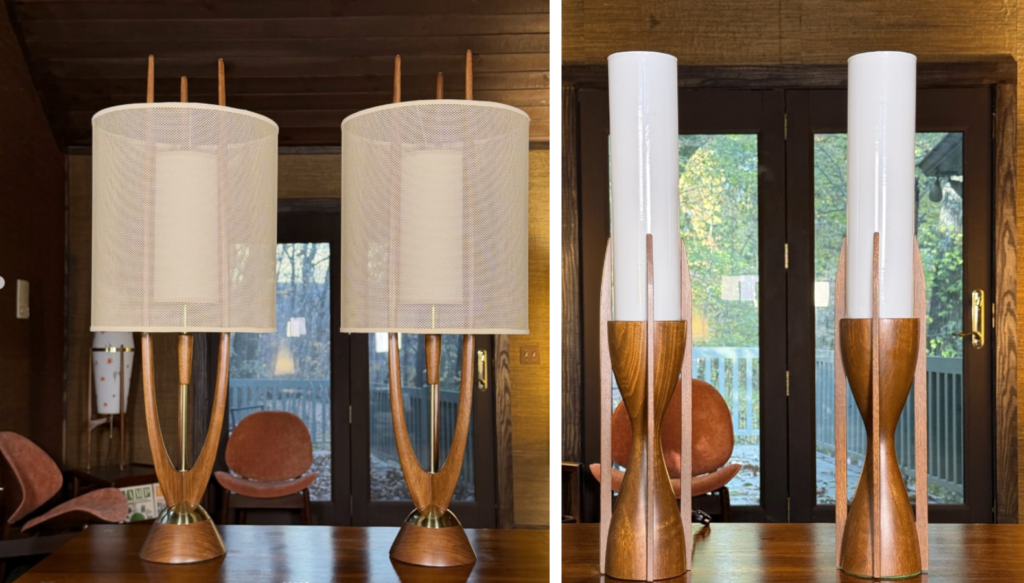
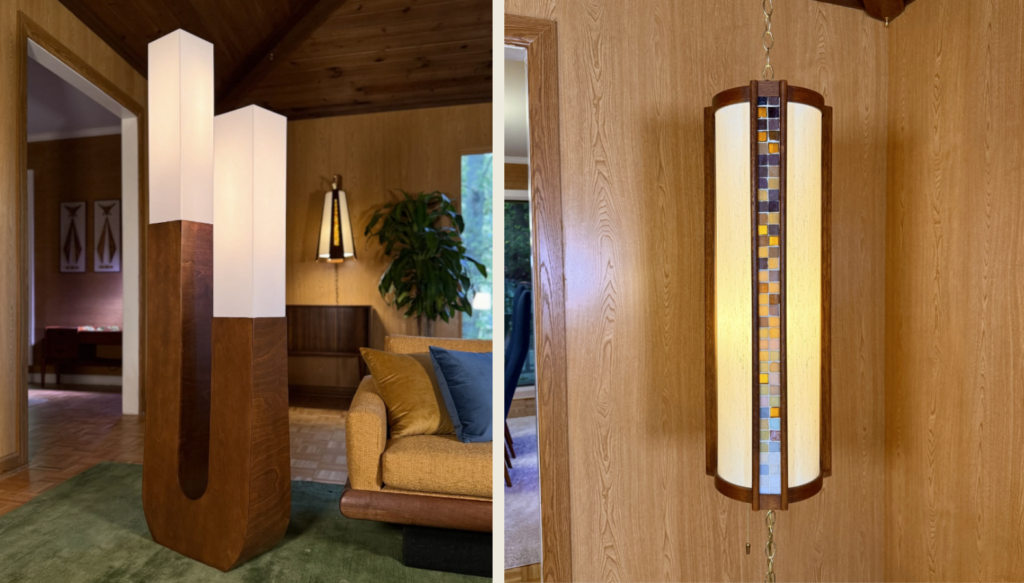
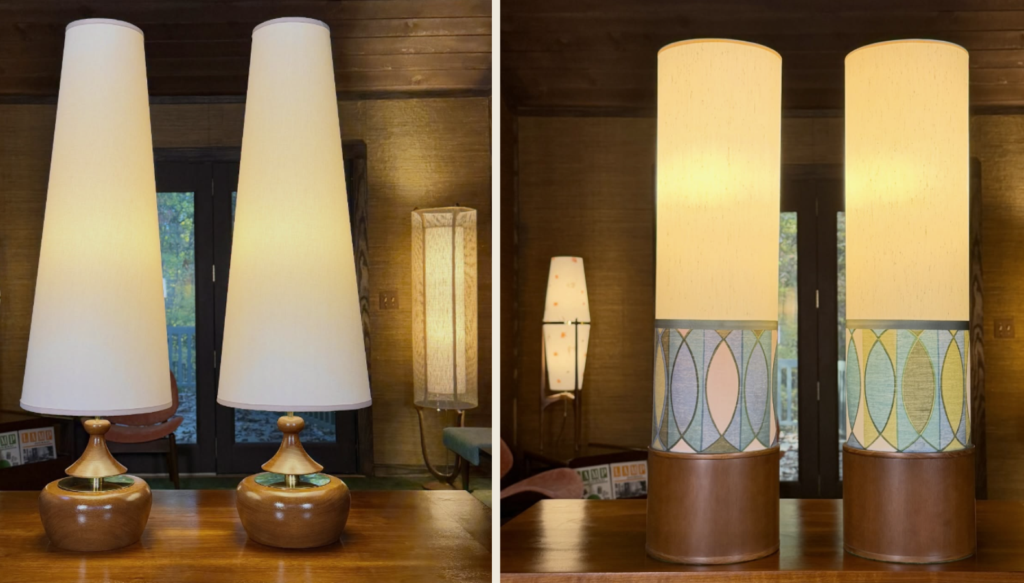
Read More →Fans of Mid-Century Modern lighting might not immediately recognize Nick Farrell’s name, but they most certainly admire his work. Through his Instagram account Esthetic Vintage and by word of mouth, Ferrell sells his impeccably restored lamps and lighting fixtures from an era that continues to enjoy a resurgence in popularity.
Realizing there wasn’t a definitive record of one of the preeminent brands of the time – Modeline of California – Ferrell’s personal research for his restoration work into historical design archives led to the creation of a new book on the topic.
Recently Ferrell chatted about his process and the category as a whole with Editor-in-Chief Linda Longo of Lighting News Now.
LNN: How do you find these vintage lamps and fixtures?
Ferrell: There are several ways. I have a bunch of people who bird dog for me; they have the time to go to estate sales and antique stores and they’ll send me photos all day long [of what they see] and I’ll give a thumbs up or thumbs down.
[In the beginning] I used to go out about once a month to do buying runs and find things myself, but now it’s more like once a year. Some of the items come from eBay, Etsy, FirstDibs and those types of sites. I’m looking for lamps and fixtures in some state of disrepair and I restore them — which usually gives me enough margin to do the restoration and have it make sense to bring to market.
LNN: Did you already have experience in restoration work?
Ferrell: I’ve been a hobbyist woodworker since high school and throughout college. It’s just a skill that I’ve always worked on. I also did classic car restoration as a hobby for a long time and got really into 1960s and ’70s European roasters like MGs, Triumphs, and Spitfires, etc. Then right before COVID – maybe 2018 or 2019 – I spent a lot of time with a friend who restores Mid-Century Modern furniture for a living and I became fascinated by that. The skills that I have from woodworking, wood finishing, and automotive work all plugged into lighting. So [Mid-Century Modern] hadn’t necessarily been an interest of mine until I became aware of it.
Initially, I got really into furniture and spent a lot of time finding these vintage furniture pieces, restoring them, and furnishing my house with them. And when I turned my attention to lighting, I just got much deeper into that world for a bunch of reasons. One thing that attracted me was that there wasn’t anybody specializing in Mid-Century Modern lighting — and it was such a huge industry. Aside from the restoration sales, there didn’t seem to be anybody going back over that period of the lighting industry to do a post-mortem of how it came to exist and how it died off in around 1981 and ’82. It just fascinated me. Honestly, since Rick Christie’s work [in Palm Springs], nobody had really done any kind of archiving or historically correct work for that era. I just got into it and then, over time, it became my full-time job.
LNN: Where do you sell the lamps and fixtures you have restored?
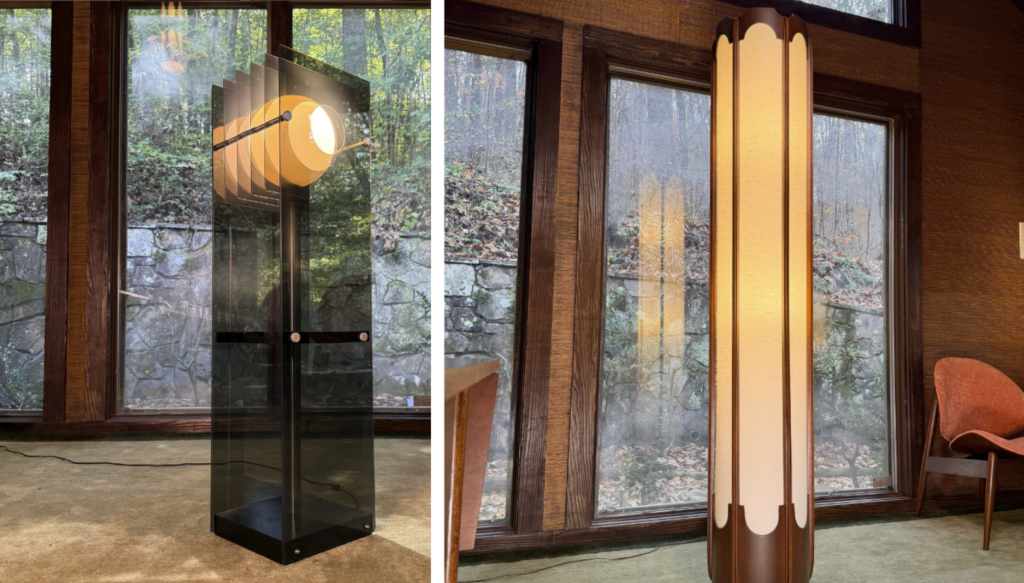
Ferrell: My sales – through my Instagram page Esthetic Vintage – are all online. I have one full-time employee, two part-time, and a bunch of subcontractors who drive the items to customers since a lot of the [pieces] are too fragile to ship. I’ve got one driver who goes to every major city in California once a month, another one who drives to Portland and Seattle, and another for the East Coast plus drivers who go to Florida and Chicago, and other areas. Once I got into [the business], I saw there was definitely a demand for it. The first year or two in business, a lot of [customers] were people who didn’t realize they loved that look until they saw it as it was intended to look. There is such a big difference between a lamp that has had 60 years of abuse, and one that has been restored to showroom condition the way the designer wanted it to appear.
LNN: With the popularity of retro period TV shows, such as Palm Royale, have you ever sold lamps or fixtures to be used in movie sets?
Ferrell: I don’t think I’ve sold any to my knowledge, but I’ve done a lot of consulting for example, when a show or a movie [set designer] wants to make sure that they’re not accidentally putting something from the 1970s into a show set in the 1950s. However, most of the people who buy from me are end users who are remodeling a Mid-Century Modern home. Then there are a lot of people who are very eclectic. It still surprises me when somebody buys a pair of lamps or a floor lamp or a chandelier from me, and they send me a photo of it in their home and it’s the only modern design piece in the room — everything else is either new pieces or a mix. In my home, I’ve committed to Mid-Century Modern, where everything is 1950s or ’60s and restored. But it’s really cool to see people just fall in love with this era of lighting. Shows like Mad Men and the dedication of a lot of set designers these days to get [the look] right has brought awareness to a generation of people.
LNN: How did you become known as the expert in whether a piece was authentic?
Ferrell: It was accidental. There’s definitely good luck involved, for sure, but as far as how the consulting [happened],usually it’s from people who have found my Instagram page. I also have sold to a lot of actors and actresses, and people who work in the industry, so they may have found me that way. And honestly, I don’t know that I’ve ever asked whenever I get an email or a phone call from somebody working on a show and asking if I could take a look at something. I just become like anybody who is a super nerd on a topic and gets really excited and jumps right into it without ever asking, “Hey, how did you find me?”
LNN: Is there anybody famous who has one of your pieces?
Ferrell: Oh, sure. I had this funny experience a couple of years ago when I was about to do some travel to India and got this message on Instagram from a woman who said, “Hey, my wife and I just absolutely love your pieces and we’re always showing them to each other.” I noticed she had the Meta verification blue checkmark and I was curious as to who she might be. I looked her up, and it was [actress] Kristen Stewart. I thought, “How cool is that?!” I now refer to this time as my Twilight week because two days later, I’m on my phone during this super-long flight to India and I get a message from [actress] Suki Waterhouse — and that was not a name I was familiar with. She reached out and said, “My boyfriend and I are furnishing our apartment in Manhattan” and they wanted to buy a bunch of pieces. I didn’t realize at the time that her boyfriend was Robert Pattinson [who also starred in Twilight with Kristen Stewart]. It just was really funny timing, and I wondered, “Did they just talk to each other?”
So things like that happen, where musical artists that I was a big fan of my whole life have bought pieces and some of have even been in my home to pick them up. I’m always wondering, “Should I act like I don’t know who they are?” I mean, they probably can’t even get groceries without somebody approaching them and I don’t want to be that person.
LNN: Is there one encounter that stands out?
Ferrell: Being based in Tennessee, there are so many music artists around, so while it’s not rare, there was one in particular that was memorable. I was really into the band Lifehouse, and Jason, the front man for that group, bought a piece from me. It was really cool to talk to him. I hesitated initially to say [that I recognized him], but I told him that his music meant a lot to me growing up.
LNN: Do you have a warehouse for the refinished items?
Ferrell: Yes, but I bought my house about a year ago and the first story is semi-finished with a concrete floor and heat, air, etc. — so it was perfect for a workshop. If you catch me on a lazy day, there might be three or four days’ worth of projects in there that haven’t made it over to storage yet.
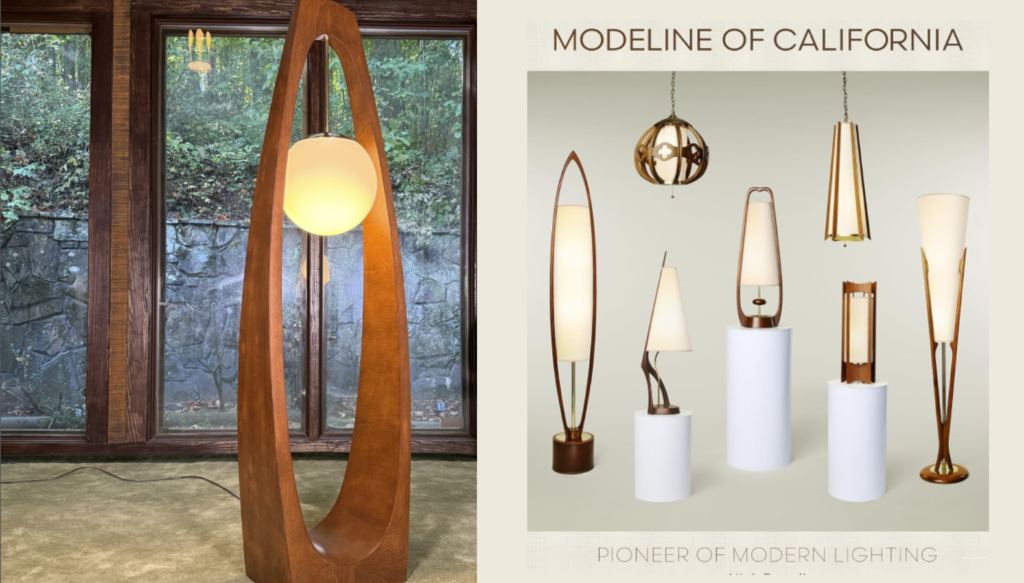
LNN: You have just authored a book, which was published by Schiffer in October. How did the idea for Modeline of California: Pioneer of Modern Lighting come about?
Ferrell: It’s like I was saying earlier where I just got fascinated by this field. The first thing I noticed was how unique Mid-Century Modern lighting was from Mid-Century Modern furniture. Initially, I assumed that Mid-Century Modern Lighting is just lighting that was designed in the style of the furniture, but when you really look at it, you notice that’s not true. They are compatible styles, but they’re not the same style in the sense that they have the same design characteristics.
For example, in Mid-Century Modern furniture, you’ll see minimal or entirely hidden hardware – a lot of work put into hiding that entirely – with tapered legs and straight uncluttered lines. Meanwhile the lighting is very biomorphic. It’s Minimalist for sure, but it doesn’t bend over backwards to be Minimalist and instead is very biomorphic. I wondered, “Okay, well this biomorphic style didn’t grow out of the furniture because the furniture was trending more and more Minimalist in that era, so where did that unique style come from?”
I think people now, who aren’t necessarily familiar with those fields, think, “Well it’s just the same style” — and it really isn’t. So I started doing internet research as much as I could and that was where it got really interesting and exciting for me. I’ll tell you what was kind of a turning point for me, where I thought, “I need to get really into this and do some real research here.” When you think about the period, and the people who were involved in the industry back in the 1950s and ’60s, you’d be lucky to find many of them still living. There were only a few figures [left] and by the time I interviewed them, I think the youngest one was 81 years old and the other was about to turn 91. So I had this kind of little panic, realizing that no one has done [the research] yet and this history is eroding. I started putting a lot of the revenue from the lamp sales into my research and flying around the country, visiting libraries and private archives and tracing genealogies to find people.
LNN: How did Modeline become the focus?
Ferrell: When I started noticing the design trends that were unique to lighting that didn’t occur in the furniture and I started to trace a lot of those back to how they spread in the lighting industry, I found that many of these roads were ending at [the company] Modeline. The biomorphic style was really popularized by them; wood was a prime medium that was dominant among most manufacturers by the mid-1960s, at least for table and floor lamps — and Modeline popularized that idea.
If you look at my Instagram, you’ll see some lamps with really clever switch placement, where the switch is integrated into the design, which was a Modeline thing. I realized that this is where I should put my focus. That’s how I came to focus on that brand.
The principal designer, who was responsible for most models, was a man named Arthur Jacobs, and Jack Haywood was a lead designer who was responsible for [the second largest portion of the designs]. Jack was this fascinating black designer working in the mid-1950s who was just absolutely prolific. He was sort of Modeline’s futurist, who was always pushing it to the next iteration of what modern design would evolve into. His work became very popular. He joined Modeline in 1956, but his work didn’t really take off until around 1972 with a line called California Contemporary. One of the styles had what they called an “extruded wood look,” which had a wood frame with a bent plywood shell that gave it an interesting [appearance] and there hasn’t been anything quite like that since.
LNN: When did you start writing the book?
Ferrell: I started writing during COVID. In the early stages, it was more like me writing down what is important to remember about the company, who were the main players behind it, and what was their mission. Did they realize at the time that what they were doing was important? Modeline was certainly very popular and they had a really good relationship with set designers. They intentionally gave lamps to The George Burns and Gracie Allen Show, Leave It to Beaver, The Munsters, and a bunch of shows that were popular. That was one of their ways of marketing, which was this kind of strategic product placement. They weren’t a tiny operation, but they just kind of slowly gained popularity over time.
LNN: Any plans for future books on some of the classic designs?
Ferrell: I wanted to start with Modeline, but yes, I know of many brands that I would like to do deep dives on. I can see myself definitely over the next year or so getting into another brand. I’ve already written a few files of ideas.
LNN: What other lighting brands interest you?
Ferrell: I find Stiffel really fascinating. For such an innovative guy, everything [Ted Stiffel] did just got kicked into a different direction. I mean the pole lamp — it was hard to find a brand that didn’t copy that; it was just ubiquitous.
I’m good friends with Greg Weiss, whose grandfather [Max] founded Laurel Lamps, and he’s done a lot of incredible preservation work – through the Laurel Lamp Foundation – and it’s very fortunate that his family kept the catalogs and have actually kept the trademark alive, which is impressive. Anytime it’s been up for renewal, they’ve gone through the work of renewing it. That’s another brand that has an interesting story. Someone might not know the Laurel name, but they see the Mushroom lamp and they’re instantly familiar with it. There are really so many brands of that era with a really unique story.
_____________________________________________________________________________________
The book Modeline of California: Pioneer of Modern Lighting is available through Schiffer Publishing, or through Amazon, Target.com, Booksellers.org, and other retailers.

