While the focus at market is on product introductions and trend directions, it’s also an…
Read More →
While the focus at market is on product introductions and trend directions, it’s also an…
Read More →
The domestic manufacturer debuted the initial lighting launch with interior designer Christopher Todd during High…
Read More →
Interior and product designer Michael Wolk reconnects with Fine Art Handcrafted Lighting for Lomond, a…
Read More →
The change, announced during the week of High Point Market, is part of a leadership…
Read More →While the focus at market is on product introductions and trend directions, it’s also an ideal opportunity to take the pulse of the industry heading into Q4.
With much of 2026 in the rearview mirror, it’s safe to say that this hasn’t been the year that most businesses expected and hoped for. The conflict in the Middle East caused unexpected shipping disruptions, spikes in fuel prices affected delivery costs and inflationary pressures negatively impacted both consumer confidence and discretionary spending.
The most common assessment I heard for business conditions thus far in 2026 is “flat.” Even companies whose products are on the high end – which had been spared a lot of sales volatility over the past three or four years – are beginning to experience buyer reticence.
All that said, the manufacturers I spoke with were satisfied with the turnout at High Point Market. And while I had wondered whether fuel and travel costs would discourage travel beyond the East Coast, it turns out this was not the case. I talked to a fair amount of attendees – both retailers and interior designers – who had traveled from areas as far as Michigan, Nebraska, British Columbia and California as well as from Alabama, Arkansas and Mississippi. For all of them, higher transportation costs had an impact, but they said the market was too important to their current projects to miss.
I also observed a noticeable uptick in the number of international attendees — especially from European countries. There were the typical organized design groups of overseas attendees, but this market I encountered a surprising number of visitors who came either by themselves to experience High Point or with only one or two other people, giving off a “small design firm” vibe.
As for most of the conversations I had, concerns over the housing market and the higher interest rate predominated when the topic turned to planning for 2027.
The A word – “affordability” – was also repeated often in hallways and showrooms.
In one instance, I overheard a phone call between a designer and her client while I happened to be standing outside of a high-end lighting showroom. The designer had just exited the showroom, having received the news that due to unexpected rising costs, the client was now facing a $5,000 increase over what was budgeted. The designer asked if the client still wanted to go through with the items selected. After a bit of back and forth, the client gave the okay.
During my time at market, I was in several showrooms where designers were accompanied by a client and the discussion turned to price. In some cases, they stayed the course and kept to their original choices; but in other conversations, they discussed pursuing lower-cost alternatives to what they had initially intended to buy.
Overall, high-end lighting showrooms were bustling – no surprise there – but so were some of the mid-range manufacturers. The differentiator seemed to be how well those mid-range companies kept up with current and emerging design trends. Those manufacturers who bit the bullet and continued to push their designs forward instead of treading water appeared to have had busier showrooms than those who kept their intros conservative in scope.
On a different note, a few lighting manufacturers that used to launch their main introductions for the year in January said they were planning to adjust – or had recently adjusted – their schedule to match High Point’s fall-spring timing due to buyers’ stating their desire to shop with a cohesive “whole home” approach in one trip.
Another interesting observation came from the president of a high-end lighting and home décor brand. He shared with me his surprise when looking over the daily visits to the showroom (the attendees scanned each day) that, on average, visitors were making roughly three separate trips to the showroom over multiple days. His interpretation of that data suggested that buyers were being increasingly thoughtful about their selections, wanting to examine a product multiple times or view the entire line more thoroughly – especially in a large showroom, where it might be easy to overlook a section – before placing their order.
One of the overarching trends at High Point Market is that industry folks are still spending the money to travel and see what’s new in design in order to offer the best and most up-to-date assortment for their clients. They are also being cautious with that spend — whether that means considering other price tiers to achieve a desired look or by taking multiple days and contemplation time before making a purchasing decision. The good news is that the majority of them are not necessarily walking away without buying. Instead, they are choosing the path of careful deliberation.
Common Themes
Now let’s talk about the design trends that were presented along with some predictions from product designers. I’ll delve into specifics in a subsequent article. Here are the broad strokes:
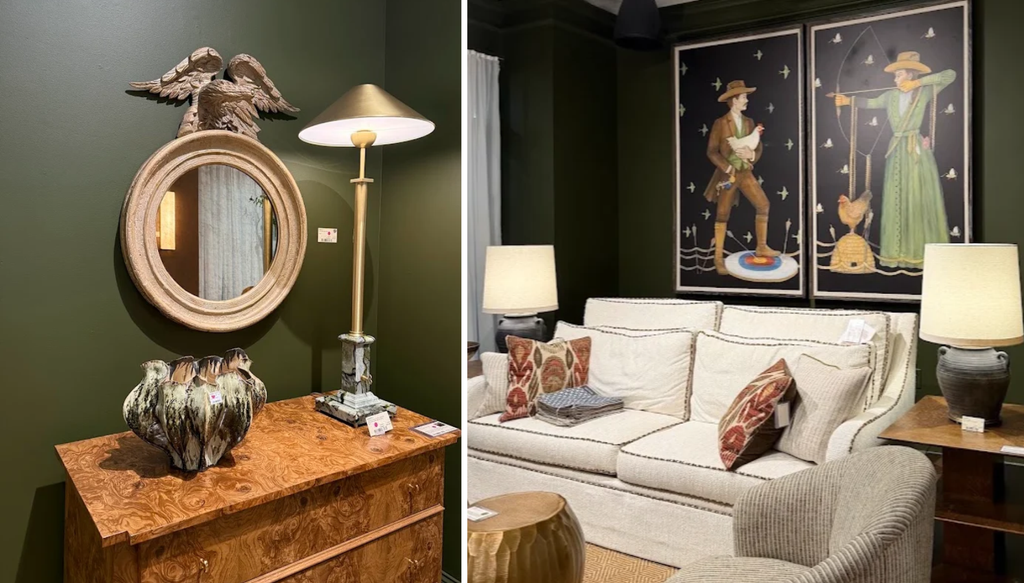
•Traditional is coming on stronger, gently nudging Mid-Century Modern aside as it gains traction.
What’s driving the trend? A yearning for comfort — and in some cases nostalgia, depending on the buyer’s age. In a topsy-turvy world of economic strife and multiple wars, consumers in their 40s to 60s seem to be looking to recreate that emotional security of familiarity that traditional décor provides. Traditional-style furnishings also carry the perception of being solid and having enduring quality that will last many years.
• Make way for Deco. At least three designers that I spoke with mentioned they are seeing the long-running popularity of Mid-Century Modern waning and the emergence of Art Deco and even Art Nouveau influences on the rise.
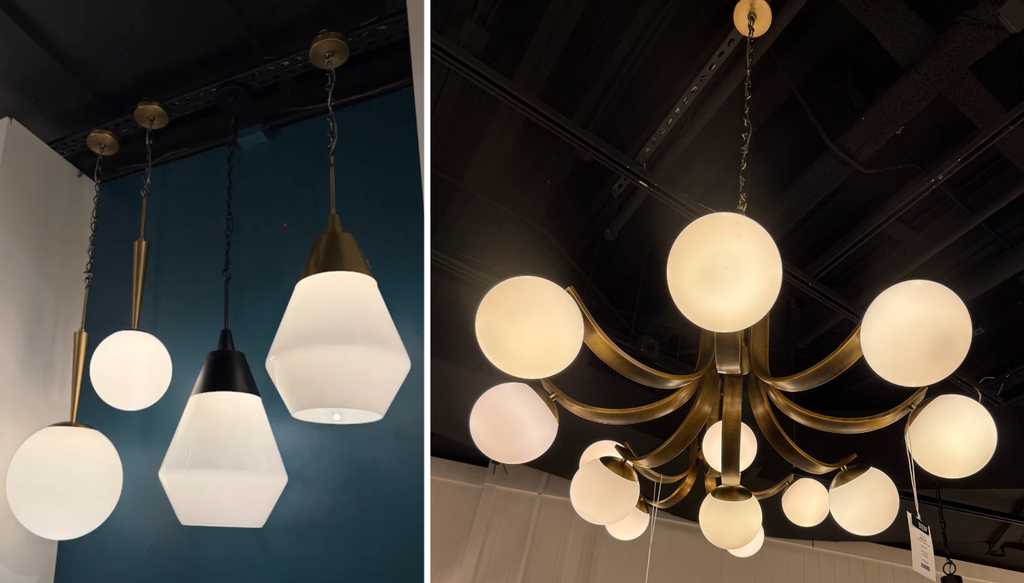
• Warm brass and brushed gold finishes will continue to be popular, especially as traditional design elements become more noticeable. The warmer finishes, the designers said, evoke a sense of coziness better than cooler finishes, such as polished nickel.
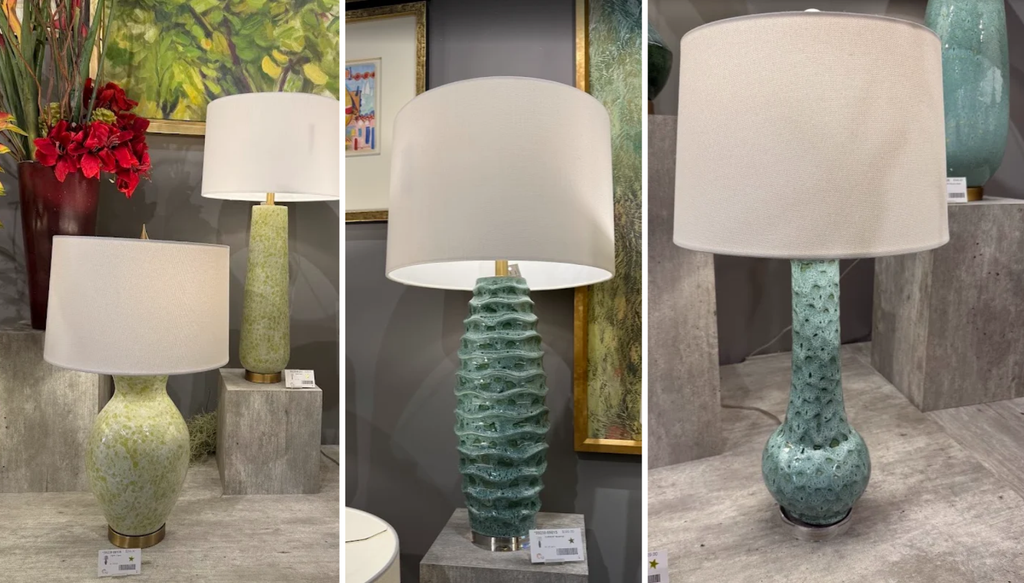
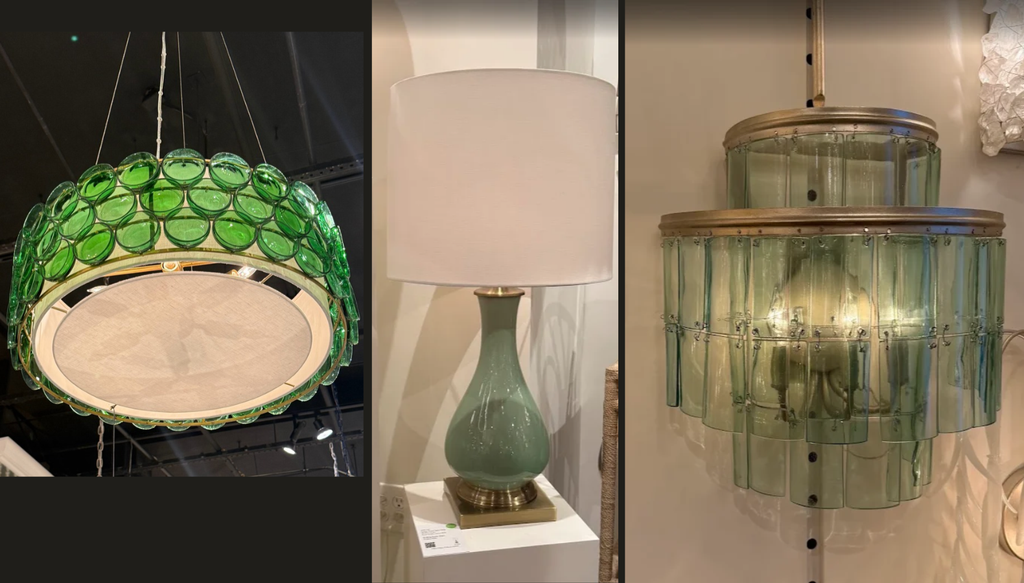
• Lamps, lighting fixtures, accessories, upholstery and furniture in darker blue finishes as well as light and darker greens are selling especially well. Greens, in particular, are especially strong — and that was even prior to the news last week of Benjamin Moore selecting Webster Green as the 2027 Color of the Year and Sherwin-Williams announcing Celery as its 2027 Color of the Year.
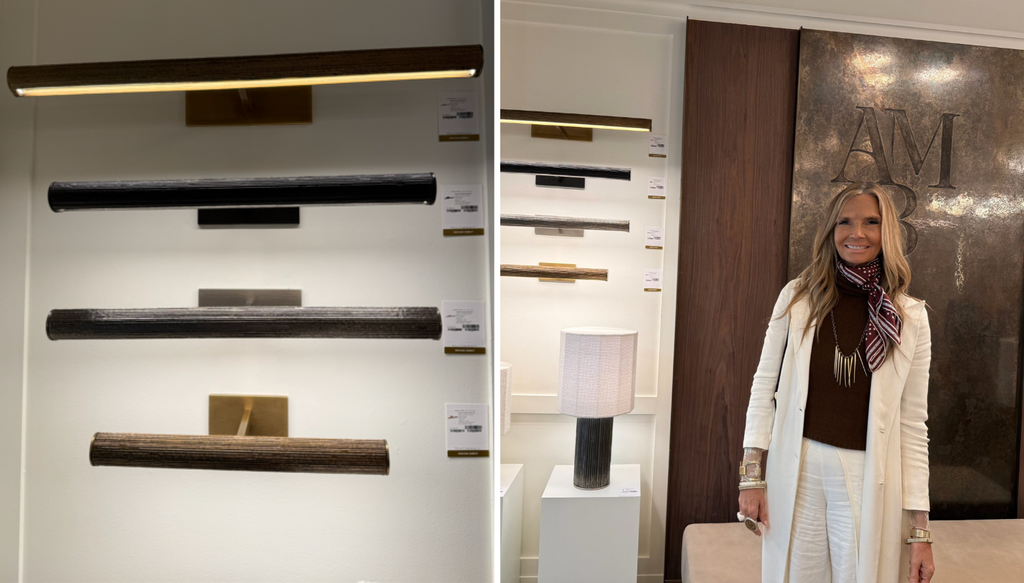
• Picture lights are having a moment – popping up in lines that never had picture lights before. Many of the new versions have a tactile look to them that gives visual interest, but even the more traditional brass styles that have heft to them are being shown and selling through.
Lighting News Now will continue to report on these trends in-depth in the coming days and weeks.