While the focus at market is on product introductions and trend directions, it’s also an…
Read More →
While the focus at market is on product introductions and trend directions, it’s also an…
Read More →
The domestic manufacturer debuted the initial lighting launch with interior designer Christopher Todd during High…
Read More →
Interior and product designer Michael Wolk reconnects with Fine Art Handcrafted Lighting for Lomond, a…
Read More →
The change, announced during the week of High Point Market, is part of a leadership…
Read More →Natural materials and motifs can give consumers a sense of “physiological ease,” says designer Nina Lichtenstein. Style Editor Julie A. Palm explores why expressive natural materials will be an enduring design direction in home interiors.
By Julie A. Palm
A few anecdata points:
1. I recently saw a TV ad for a medication — one of those drugs seemingly named by pulling a random selection of Scrabble tiles out of a bag. It featured the usual assortment of average-looking, middle-aged adults doing average, middle-aged things. In tiny script at the bottom of the screen, it noted that some of the scenes in the commercial were generated by artificial intelligence. These people weren’t walking on the moon. “How hard is it to film some middle-aged folks sitting in a kitchen?” I asked myself.
2. If you search on the popular photo and video site Adobe Stock for the word “lighting,” you’ll find more than 3.25 times more AI-generated images than non-AI-generated images.
3. In the past few years, Americans’ use of generative AI has increased dramatically as the number of AI tools has multiplied and people have begun experimenting with them. A recent Pew Research study released in June shows that about half (49%) of U.S. adults now use AI chatbots like ChatGPT and Gemini. That’s up from just 33% in 2024. And about one-quarter of Americans say they use AI tools every day. (As I write this, I’m listening to a podcast in the background. The ad that just came on encouraged me to use ChatGPT more in my own work.)
We are living in an increasingly artificial world.
And, perhaps, that is why in their own homes, Americans feel pulled toward something — anything — more natural. Stone and marble. Real wood with finishes that highlight hues and grains. Leathers and natural fibers. Silhouettes that mimic plants and other natural forms.
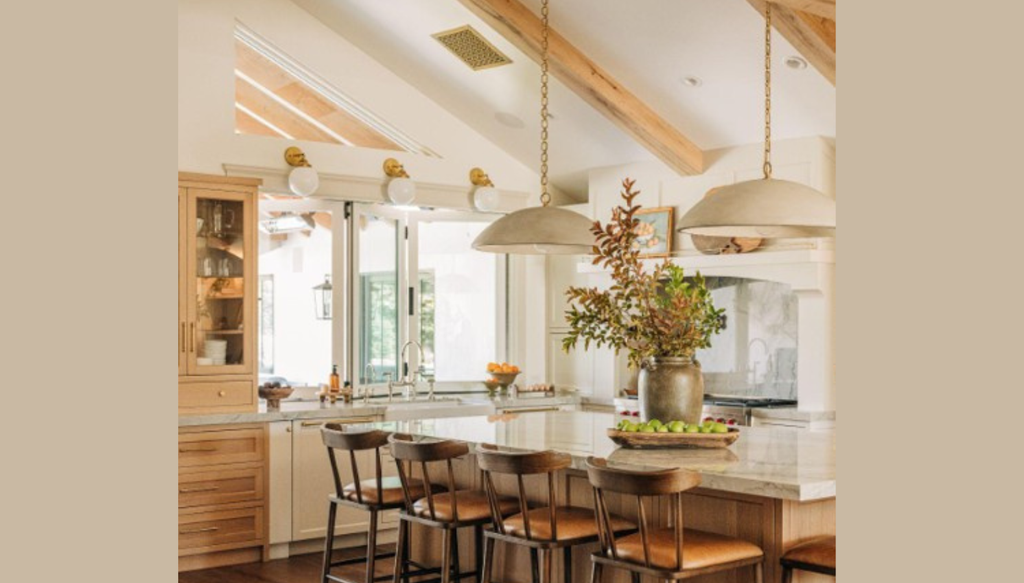
The embrace of nature extends even to human-forged materials like metals, where more natural bronze and brass finishes are taking center stage and the promise of patina is valued.
In its latest fall home trends report, Houzz notes that “the interest in natural materials is moving beyond simply choosing wood cabinetry or a stone countertop.”
“Pros are seeing more appreciation for the variation, texture and imperfections that make natural materials feel authentic. Natural stone is showing up in unexpected applications, including sinks, furniture and lighting. Handmade and high-variation tile, honed and leathered stone, plaster and warm wood all contribute to a more tactile look,” according to Houzz, which offers software and an online community for architecture, interior/landscape design and home improvement. (Italics mine.)
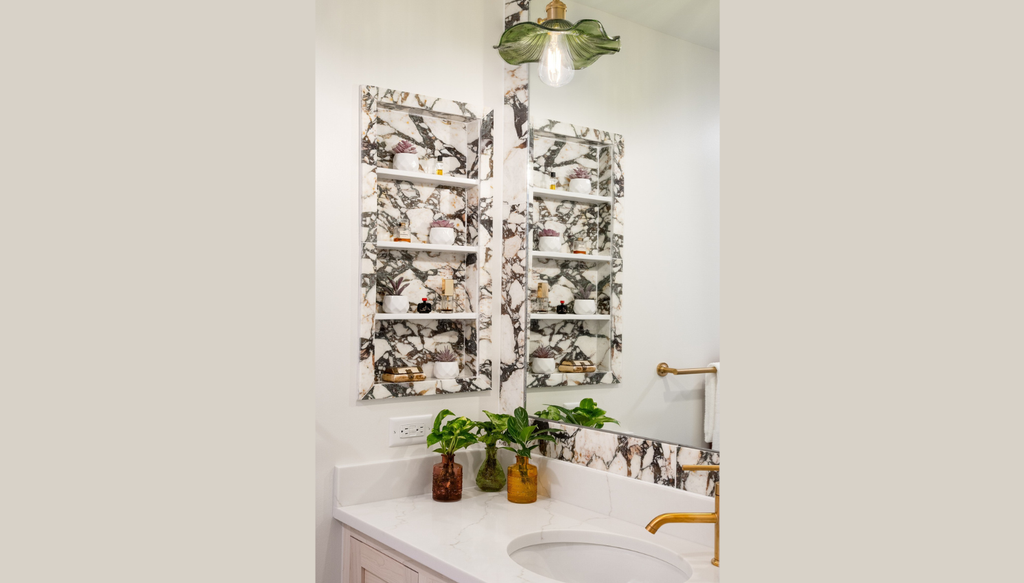
“I am seeing a continued movement toward nature-inspired forms, fixtures that reference leaves, vines, raindrops, snowflake-like crystalline structures, stars, flowers and candle-like silhouettes,” Nina Lichtenstein, founder and principal home designer at Custom Home Design by Nina Lichtenstein in Thornwood, New York, told me when we talked about lighting earlier this year. “These elements are not merely decorative; they subtly mirror patterns and archetypes our brains recognize from the natural world.”
Interior designer Amy Peltier appreciates the influx of more “organic-looking finishes and materials” and is using more lighting with “natural-looking bronze finishes, not the painted black finishes” in her projects.
“(Lighting) is really … getting a subtlety and a naturalness to all finishes,” Peltier told me recently. She’s the founder and creative director of Peltier Interiors, which has offices in San Marino, California, and outside Washington, D.C., in Northern Virginia.
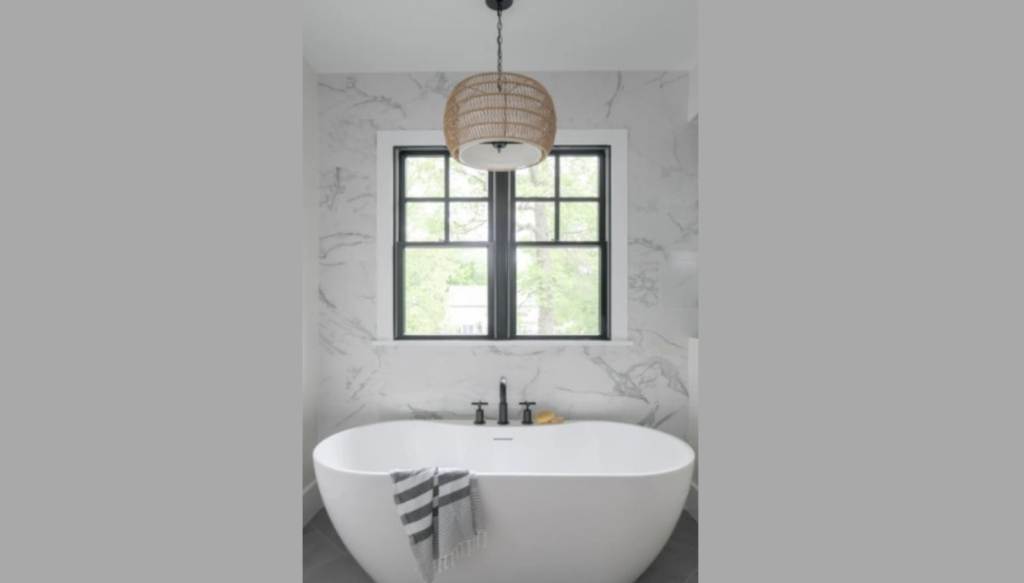
Lighting News Now Editor-in-Chief Linda Longo recently had a great roundup of new lighting fixtures that feature natural materials, were inspired by nature — or both. Debuts at June Lightovation evoked flowers, leaves and shells and incorporated components like travertine, woven rattan and alabaster, she noted.
Lichtenstein pointed out that natural materials and motifs blur lines between indoors and outdoors, “reinforcing our innate connection to the natural world and fostering a sense of openness, continuity and physiological ease within the home.”
I think that point about “physiological ease” is important.
Because while Americans are quickly embracing AI, they feel uneasy about it. That same Pew research shows 67% of Americans “have little to no confidence in the U.S. government to regulate AI effectively,” about six in 10 are “not confident in U.S. companies to develop and use these tools responsibly” and 63% say AI advancements are “moving too quickly.”
In a time of unease and uncertainty, we often crave grounding.
A few other anecdata points:
* Two of the most popular gatherings at my church are a monthly intergenerational potluck that finishes with a few rousing rounds of bingo and a new monthly board game night that is one of our fastest-growing events.
* A recent US Weekly article shows Gen Z and younger Millennials participating in socially focused craft hobbies. “Knitting, crochet and embroidery are moving out of the living room and into craft core pop-ups, workshops and cafe-style gatherings,” the article says.
* Pop stary Miley Cryrus’ latest single, “Bass Persuades,” encourages listeners to put down their phones and hit the dance floor.
Potlucks and board games. Knitting circles. Dancing with friends. Those things feel real — even if we promote them on social media, text people to finalize plans and take a self-driving taxi to get there.
And materials like wood and stone and rattan feel real.
As Lichtenstein said, “trends are most meaningful when they align with how humans biologically respond to their environment.” We live in an increasingly high-tech, AI world but our bodies, our souls respond to natural beauty and natural materials.
Whatever the future holds, I suspect we will always feel a connection to the materials we’ve been creating and building with for thousands of years, and we may crave them more than ever.
Related articles