During the recent ALA Conference, members were updated on the current and impending legislation and…
Read More →
During the recent ALA Conference, members were updated on the current and impending legislation and…
Read More →
The interior designer tells Style Editor Julie A. Palm that warm finishes, cordless rechargeables, and…
Read More →
The multi-month program provides education, tips, and support for independent retailers. Dallas Market Center (DMC)…
Read More →
The Lighting Group in Washington State and Boston Light Source will now represent Access Lighting…
Read More →During the recent ALA Conference, members were updated on the current and impending legislation and regulations impacting the industry — and ALA’s fight to get members’ voices heard.
In addition to networking and educational sessions on a wide variety of industry and business topics, American Lighting Association (ALA) members attending the annual conference were informed in great detail about the group’s involvement making lighting concerns heard in Congress.
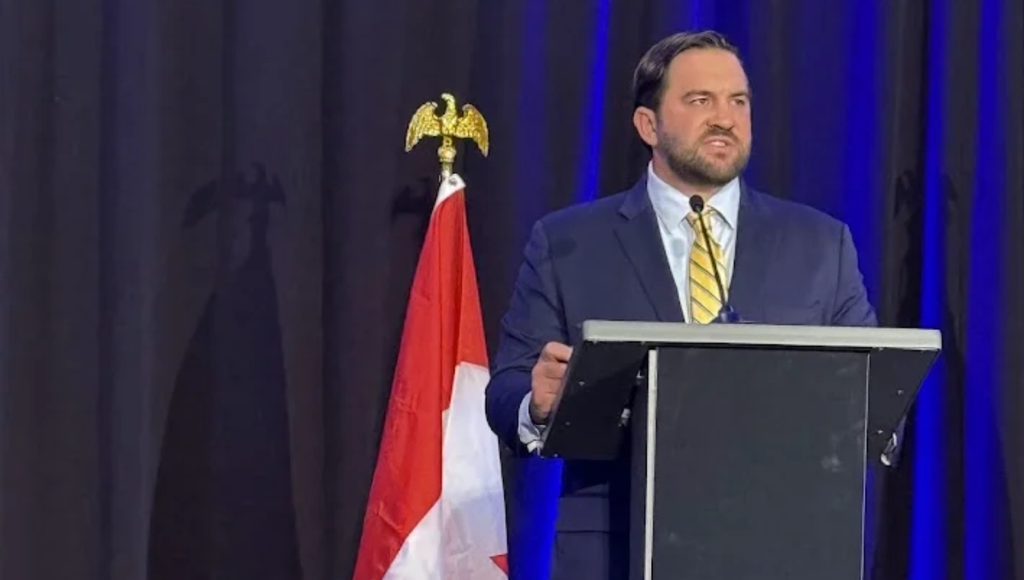
Updating the membership on the latest governmental action was Palmer Schoening of Schoening Strategies, who is the government affairs consultant hired by the ALA in February 2025.
“I’ll kick off with everyone’s favorite subject: tariffs. And since we last had this group together [the 2025 ALA Conference in Louisville], a lot has happened,” Schoening said. “The Supreme Court struck down the ‘emergency tariffs’ and immediately afterward, the [administration] turned to Section 122 of the 1974 Trade Act. And they did that because there are no investigations required to immediately put those tariffs in place. But there’s a caveat with Section 122, which is that those tariffs can only last 150 days. So, we had the IEEPA tariffs come and go. We had Section 122 come and go [as of July]. And the administration has made clear that the endgame here is increasing the Section 301 and 232 tariffs because they think those are the more durable tariff authorities.”
Bringing the membership up on the latest developments, Schoening added, “Now in terms of the total tariff burden on the industry, I think back to April of last year when we had a 145% stacked rate on China. So the burden has decreased, which is good news — but it’s still incredibly unpredictable. I was in a meeting in DC the other week and someone in the meeting said, ‘You know, if Customs would have just put [a set percentage] for tariffs across the board on everyone, at least it would have been a predictable situation.’ I have to admit that one of the least-favorite parts about my job is having to constantly check the President’s tweets to see what the trade policy might be the next week — and we’ve seen that recently with Canada.”
Regarding Canada, Schoening noted that the U.S. imposed 50% tariffs after talks fell apart on USMCA. “They’re in the process of renegotiating that agreement right now,” he stated, adding that Canada responded almost immediately by imposing tariffs ranging between 15 and 50 percent and that there are some lighting products affected.
Schoening noted that the tariff treatment depends on the HTS code, and with thousands of HTS codes and unique SKUs, it’s difficult for hard for him to make blanket statements about tariffs in the broad sense. Editor’s Note: The HTS (Harmonized Tariff Schedule) code is a 10-digit number used to classify products imported into the U.S. and used to determine the exact tariff or duty rate that needs to be applied.
According to Schoening, product classification depends on the HTS code as well as the country of origin. “We [ALA] participated in the USMCA review process,” he explained. “We emphasized the importance of our Canadian partners and our North American supply chains. And I do want to emphasize that USMCA is still in effect and is not scheduled to be repealed. The challenge right now is getting the U.S., Mexico and Canada all on the same page to come up with a new agreement. Frankly, we don’t see an easy off-ramp in the negotiations between the U.S. and Canada right now as both sides seem to be dug in.”
Don’t forget your refunds
Schoening mentioned “a couple of bright spots” when it came to tariffs. For one, he said the refund system seems to be functioning “relatively smoothly.” He noted, “We’ve had about 25 million entries that have been accepted, and about $130 billion worth of refunds that have gone through. I know some of our larger members have claimed their refunds, but if you’re a smaller company or a middle-sized company and you think you might due refunds, the first thing you need to establish is whether you are the importer of record. Typically, if you’re importing goods directly to the U.S. under your company’s name, you are the importer of record. If you are going through a distributor, you might not be.”
Schoening encouraged ALA members who need help navigating the refund process to reach out to him. “I’ve helped a number of companies navigate the CBP refund system and have had members of Congress intervene at times to renew login information for certain companies, and we work with a number of attorneys as well that could be helpful.”
He affirmed, “It’s your money, make sure to claim it — and reach out if you need help.”
Where things stand on the de minimis exemption
The second bright spot that Schoening pointed to is end of the de minimis exemption. “This is one of the first things that Laurie Gross [acting chair of ALA at the time] and I talked about when I took this position,” he said. “It allowed goods under $800 to enter the country duty-free and virtually [without] inspection. When One Big Beautiful Bill was passed, it ended the de minimis loophole for China specifically.”
Schoening explained that originally the end of the de minimus exemption was scheduled to go into effect at the beginning of 2027; however, President Trump issued an executive order ending the de minimis loophole for all countries. “That is still in place,” he confirmed.
Tackling unfair competition
“One of our biggest challenges has been what we’re broadly calling ‘unfair competition,’ and that is third-party sellers selling noncompliant, uncertified, and sometimes outright counterfeit products on online platforms,” Schoening said. He pointed to research put together for the ALA by Hunter Fans that indicated 80% of all ceiling fans are now sold online.
He informed the ALA audience that, using the example of one of the major online platforms, out of the top 200 brands selling ceiling fans, 50% of them are new within the past two years.
“So we’re seeing the trend line heading in the downward direction for companies that we’ve identified as legitimate companies, and many of those are ALA members. It used to be [that they had] about 50% market share on these large platforms, and now that’s down to almost 10%. And who is replacing them? Well, it’s an alphabet soup of Chinese companies,” Schoening stated. “We’ve had [ALA] members test a lot of these products. Oftentimes they don’t even have an EnergyGuide label on the box — which is the first red flag. They catch on fire. They don’t have proper installation instructions. And when a ceiling fan catches on fire, or falls on a young child because it’s not installed properly, that puts a black eye on the entire industry. So this is the scale of the challenge that we’re facing.”
How ALA is handling it
Schoening and [new] ALA President Jon Melchi tackled the issue head-on. “We participated in a Congressional Trademark Caucus event and had our own ALA table there. Behind us, we had a poster where we challenged members of Congress and their staff to identify a legitimate ceiling fan versus a knockoff,” Schoening recounted, adding, “Only a few of them got it right.”
According to Schoening, Senator Coons from Delaware, a member of the Judiciary Committee and on the IP subcommittee, and Ben Cline from Virginia, who is also on Judiciary Committee, stopped by the ALA table and were very interested in the topic. “This led us into productive conversations with their staff about producing legislation to address this issue,” he said. ALA has also had conversations with the general counsel for the Department of Energy, which has a certain amount of enforcement authority, regarding potential action.
Schoening stated that ALA has had direct negotiations with online platforms, which has yielded results. “Just recently, we had one of the major online platforms pull down hundreds and hundreds of products that we identified [and tested] as noncompliant and uncertified,” he explained. “If you find examples of these, please send them to us. This is a bottom-up approach. We’re looking to [members] to tell us what needs to be done in Washington and how we can help you. One of the biggest challenges [can be] not having enough input, but we get a lot of input from our members.”
ALA’s short-term goal, according to Schoening, is to generate some congressional hearings on this issue. He explained, “That means platforms would have to sit down and answer questions from Congress, like, ‘Why are you selling unsafe products on your platforms?’ and ‘Why are you undercutting legitimate American businesses?’ We’ve made a lot of progress on that issue and we’re finally on offense with our own legislation that should be offered this year. But in government affairs, it’s also just as important, or even more important, to play defense.”

The latest on the LIT Act
The recent bill called the LIT Act (the Liberating Incandescent Technology Act) has been making the rounds in Congress as recently as September 17, when the U.S. Department of Energy testified in support of the bill, which would essentially reverse a 20-year law banning the sale of most incandescent light bulbs due to lack of efficiency.
Schoening told ALA members, “The name ‘Liberating Incandescent Technology’ sounds great, doesn’t it? Well, here’s what the bill actually does. It removes general service lamps (GSL) from DOE’s Appliance Standards Program altogether. It repeals the 45 lumens-per-watt standard that was finalized in 2022, and it repeals the 100 lumens-per-watt standard that is scheduled to go into effect in 2028. And it prevents all future DOE regulation of bulbs.”
ALA asked its membership – particularly manufacturers of light sources – how the LIT Act would affect their companies and the industry. “Here is what we heard,” Schoening said. “First of all, that ship has sailed. The industry has moved past those old standards and has invested heavily into LED technology. You’ve developed products that far exceed those outdated incandescent levels.”
There are also some risks involved if it passes. “There would be widespread confusion,” Schoening stated. “If the Appliance Standards Program for GSLs goes away altogether, it introduces some public safety concerns and litigation exposure for manufacturers.”
Another concern ALA members voiced to Schoening is that the passage of the LIT Act could potentially lead to “a patchwork of conflicting state laws that would create a compliance nightmare for our members,” he recounted.
Schoening noted that the industry’s adoption of LED technology has had impressive results in energy savings, noting a 33% decrease from pre-LED usage.
“There was a legislative hearing two weeks ago, and [ALA] took your input and we put it into a letter with talking points and worked with the National Association of Electrical Manufacturers to meet with every single member of Energy and Natural Resources Committee and explained the industry’s position,” he said. “Senator Heinrich read our ALA letter into the congressional record and this set the tone for the entire hearing. And then Senator Cortez Masto cited our ALA letter many times during the hearing to highlight her opposition to the LIT Act.”
Schoening emphasized how important it is to the lighting industry to have a voice in Washington D.C. and to be actively involved. “This is us taking your input and translating it directly into congressional action,” he said. “This is an example of how we took your input and translated that into a defense of the industry during an important hearing that was covered widely [in news media].”
What’s next
Schoening mentioned that the ALA learned of the impact of the EPR (Extended Producer Responsibility) laws through a member who had received a notice from the Circular Action Alliance (CAA) regarding a violation of packaging and paper usage in packaging/shipping. Seven states right now have their own individual EPR laws: Maine, Oregon, Colorado, California, Minnesota, Maryland, and Washington. The concern is that the CAA is legally authorized to issue fines and collect proprietary company data going back a number of years. Editor’s Note: Information about CAA can be found here.
“So we have concerns about privacy, and we have concerns about the constitutionality of what they’re trying to do here,” Schoening explained.
Most notably the National Association of Wholesaler-Distributors (NAW) has filed lawsuits in Oregon and California in the belief that the EPR laws are unconstitutional. While the Oregon court case did not go in NAW’s favor, the association has appealed the decision. California is the next case to be heard.
Schoening pointed out that at stake is “millions of millions of dollars” that could be collected as part of fines/violations in these EPR laws and is another example of “member input driving what ALA is doing in terms of advocacy in the states and with Congress.”
To help its membership, ALA has put together an EPR tracker on its website. “While we’re advocating and exploring legal remedies, we want to make sure that members are updated on exactly what’s happening in each individual state. You can click on any of the seven states and we’ll have the current status of the law, when it passed, the key compliance requirements, an update on any litigation that’s ongoing, and then compliance resources so you can make sure your company is not going to be fined and you’re fully in compliance,” Schoening said. “We are making sure you have the resources you need to keep track of what’s happening, because there is so much that happens both at the federal and the state level. In terms of compliance and staying up to date on everything, we want to help.”
At the conclusion of his keynote address, Schoening said, “If I can leave you with one thing, it’s that you now have a voice in Washington. You saw that in the hearings. You see that in the updates that we send out consistently. You see that in what we’re doing on the legal front and the legislative front with these EPR laws on the state level. That’s because of your input. You’ve provided some really valuable data and examples to help us advocate for you. Thank you.”
Related articles
Evening Under the Stars Opens ALA Conference

